SUMMARYResearchers at the University of Exeter and other institutions found that butterfly wing stripes and spots can create motion illusions that make it harder for birds to judge a butterfly’s speed and direction. Published in Nature, the work links these visual effects to predators missing their prey during the final moments of attack. Butterfly wing color comes from photonic crystal structures in chitin scales rather than pigment.
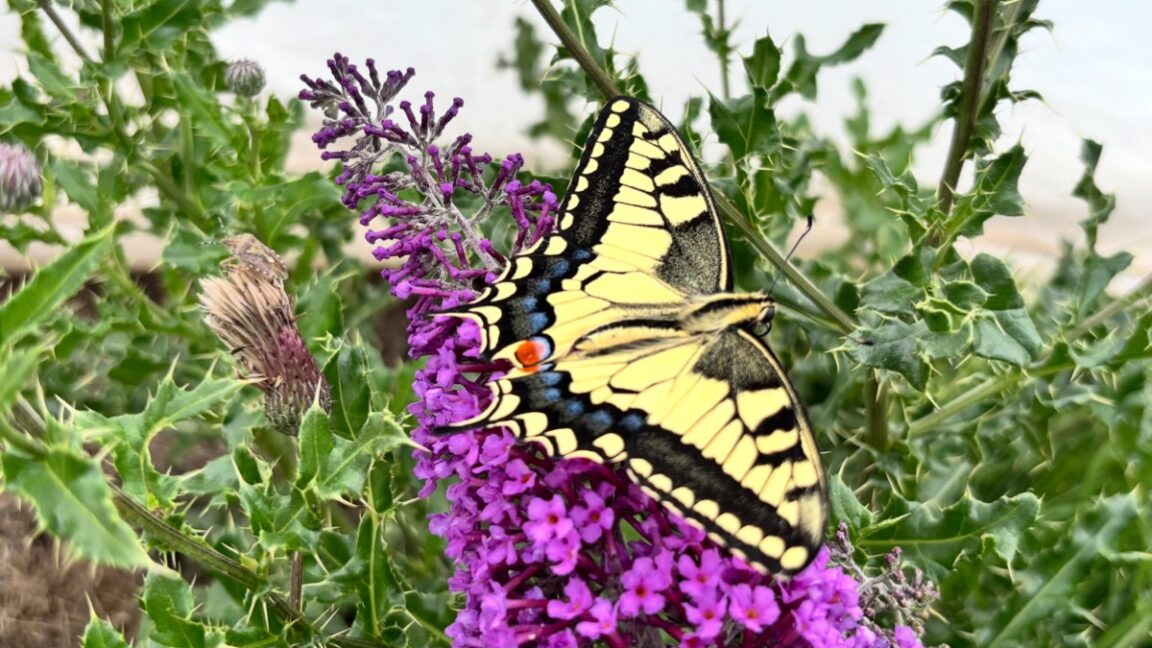
Old-fashioned striped barbershop poles turn in place on a vertical axis, but humans typically perceive the stripes moving upward rather than turning with the pole. It's a well-known visual illusion arising from processing biases in human vision. According to a new paper published in the journal Nature, a similar effect could explain how butterflies often evade predatory birds: Their flight patterns and wing patterns combine to make it hard for predators to accurately gauge speed and direction.
"The stripes and spots on many butterflies’ wings interfere with the way visual systems try to guess the direction and speed of moving things, boosting false motion cues while hiding the butterfly's true heading," said co-author George Hancock of the University of Exeter in Cornwall. "The illusions interfere with the predator’s most basic visual targeting system and disrupt the final ‘ballistic attack’ in the tens of milliseconds when it commits to grabbing its prey, with no time to change course. As a result, birds and other predators will often simply miss."
Butterfly wings have long fascinated scientists, ever since the first documentation of the growth of said wings back in 1938. By 2021, researchers at MIT had captured on video the unique structural growth of butterfly wings—continuously, as a butterfly develops inside its chrysalis—for the very first time. Butterfly wings are an example of structural color in nature: the bright iridescent colors don’t come from pigment molecules but from what physicists call photonic crystals. The scales of chitin (a polysaccharide common to insects) are arranged like roof tiles. Essentially, they form a diffraction grating, except photonic crystals only produce certain colors, or wavelengths, of light, while a diffraction grating will produce the entire spectrum.