SUMMARYResearchers at the RIKEN Center for Biosystems Dynamics Research in Kobe found that fruit flies fed less yeast protein as larvae lived longer as adults. In experiments led by Fumiaki Obata, the team reduced yeast in the diet from 8% to 1% or 2% during the larval stage, then returned the flies to normal food after pupation. The work identifies a protein-linked memory of early diet that shapes lifespan later in life.
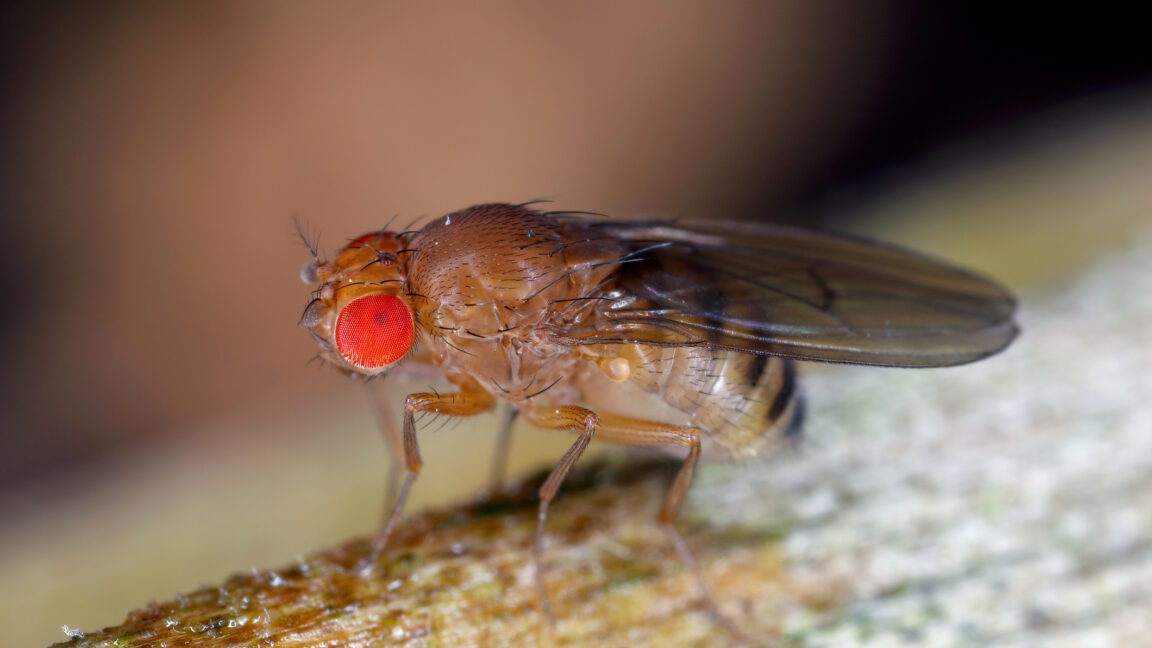
Back in the 1930s, scientists noticed that water fleas and rats fed restricted diets while young went on to live longer. The same effect has since turned up in fruit flies and mice. What we did not know was how a meal eaten in infancy could affect health weeks, months, or even years later. A recent Nature study might have found the answer.
A team led by Fumiaki Obata, a biologist at the RIKEN Center for Biosystems Dynamics Research in Kobe, Japan, found a protein that carries a record into adulthood of what fruit flies ate as larvae, influencing how long they live.
Hungry maggots
Lab fruit flies are fed a mix of yeast and sugar, with yeast being their main source of protein. “We decreased only the yeast concentration in the diet, from eight percent to either one or two percent,” Obata explains. This low-protein diet was introduced roughly halfway through the larval period. Once the flies emerged from their pupae as adults, they went back on standard food.