SUMMARYKatalyst Space Technologies’ Link satellite, launched to rescue NASA’s Swift gamma-ray observatory, spun out of control in orbit after losing two reaction wheels and encountering trouble with its cold gas thrusters. The refrigerator-size servicing spacecraft was under a $30 million NASA contract to reach Swift, attach to it, and raise its orbit before atmospheric drag could bring the observatory down. Engineers are working to recover Link’s attitude control and communications.
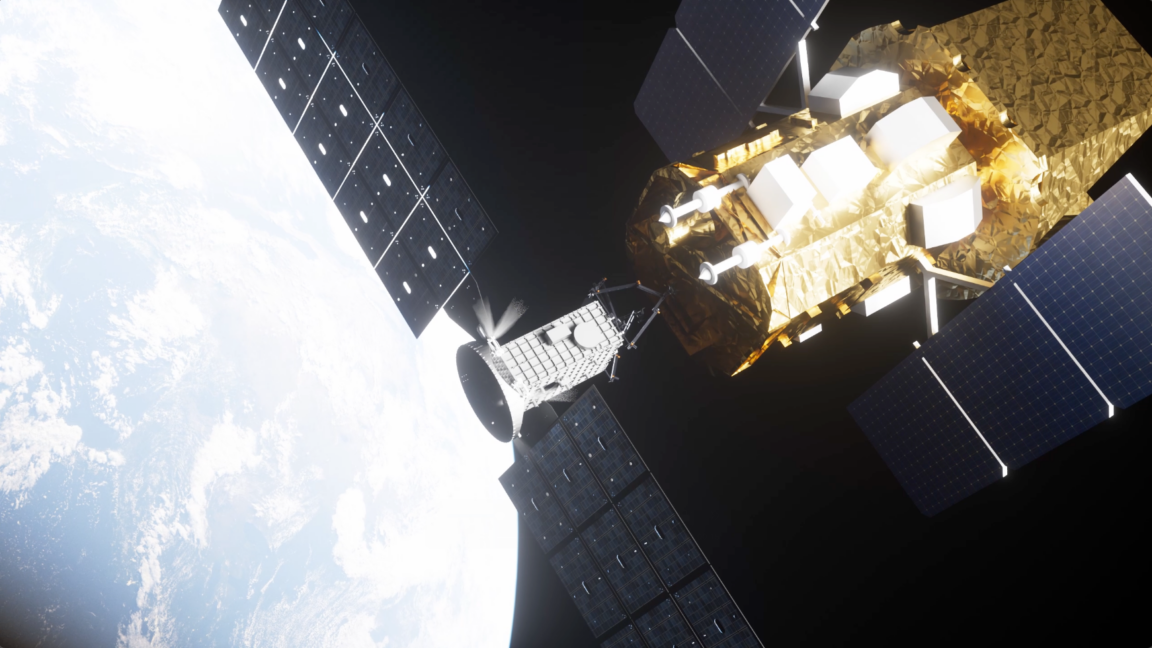
One week ago, more than 200 miles above the Earth, a refrigerator-size satellite making its way toward an attempted rescue of NASA's $500 million Swift gamma-ray observatory suddenly spun out of control.
It didn't look good. The spacecraft, named Link, was rotating on multiple axes, rendering it unable to maintain a reliable communications link with the ground and complicating efforts to arrest the spin. Two of the satellite's three reaction wheels, used for pointing, also stopped working. Through sporadic radio contact, engineers discovered a problem with some of the spacecraft's cold gas thrusters used for finer attitude control.
The Link satellite is built, owned, and operated by Katalyst Space Technologies, a satellite servicing startup that won a $30 million contract from NASA to fly up to the Swift observatory, grab onto it, and boost its orbit before succumbing to aerodynamic drag and burning up int he atmosphere.