SUMMARYA study by Jacob Haqq-Misra of Blue Marble Space and Eric Wolf of the University of Colorado Boulder examines how long life could persist on Earth as the Sun gradually brightens over billions of years. The researchers focus on climate feedbacks, especially the carbon cycle and silicate weathering, which help regulate atmospheric CO2 and affect Earth’s long-term habitability before the Sun becomes a red giant.
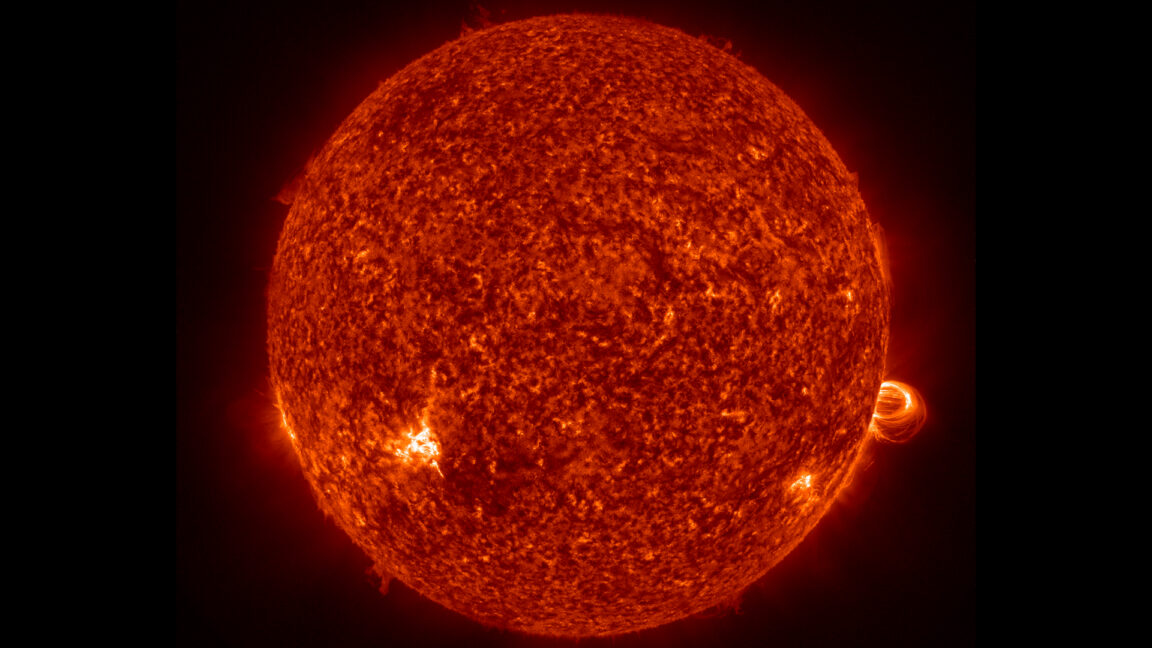
It’s a bit worrying when a scientific paper begins, “How long will life on Earth survive?” But in this case—a study by Jacob Haqq‐Misra of Blue Marble Space and Eric Wolf at the University of Colorado Boulder—the billion-plus-year timeline under consideration shouldn’t cause you too much existential panic.
The context for this question is that we understand the Sun will brighten as it eventually matures into a red giant that swallows the Earth in a solar furnace. So, where along that 5 billion-year path will life on Earth, in fact, be cooked?
Weathering and the weather
This isn’t just a question of incoming radiation. Among the thermostat-like stabilizing feedback loops in Earth’s climate, the cycling of CO2 through the solid Earth is a major factor over timescales this long. The weathering of silicate rocks at the surface converts atmospheric CO2 into carbonate that ends up on the seafloor, where it can be subducted into the mantle with tectonic plates. (And eventually, it can cycle back out to the atmosphere through volcanoes.)