SUMMARYAnthropic’s first Public Record survey polled 51,993 Americans in November and December 2025 to gauge views on AI, including hopes, fears, workplace use, and governance. Nearly half of respondents ranked curing diseases among AI’s top benefits, while job loss was the leading concern at 64%, followed by cognitive dependency and misinformation. The survey found strong bipartisan support for government oversight, with 71% favoring a regulatory role and only 15% trusting AI companies to make decisions about AI development and use.
We’re conducting a new survey series, the Anthropic Public Record, to understand how the public thinks and feels about AI, and presenting a snapshot of the results from our first survey conducted in November and December of 2025 with nearly 52,000 Americans.
We found:
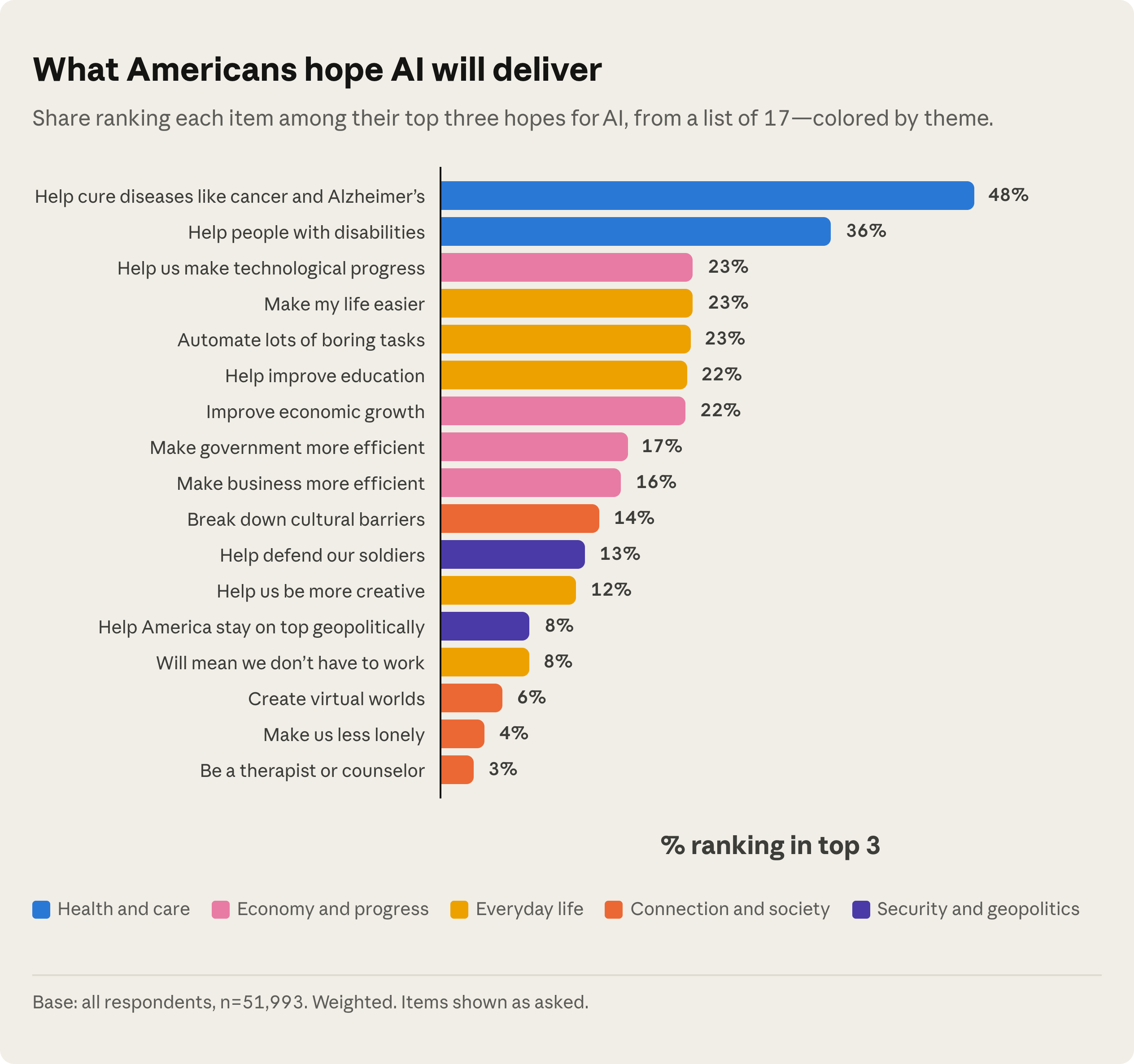
- Nearly half (48%) of Americans ranked curing diseases like cancer or Alzheimer’s as one of their top three hopes for AI, followed by helping people with disabilities (36%), then making technological progress and making life easier in general (tied at 23%).
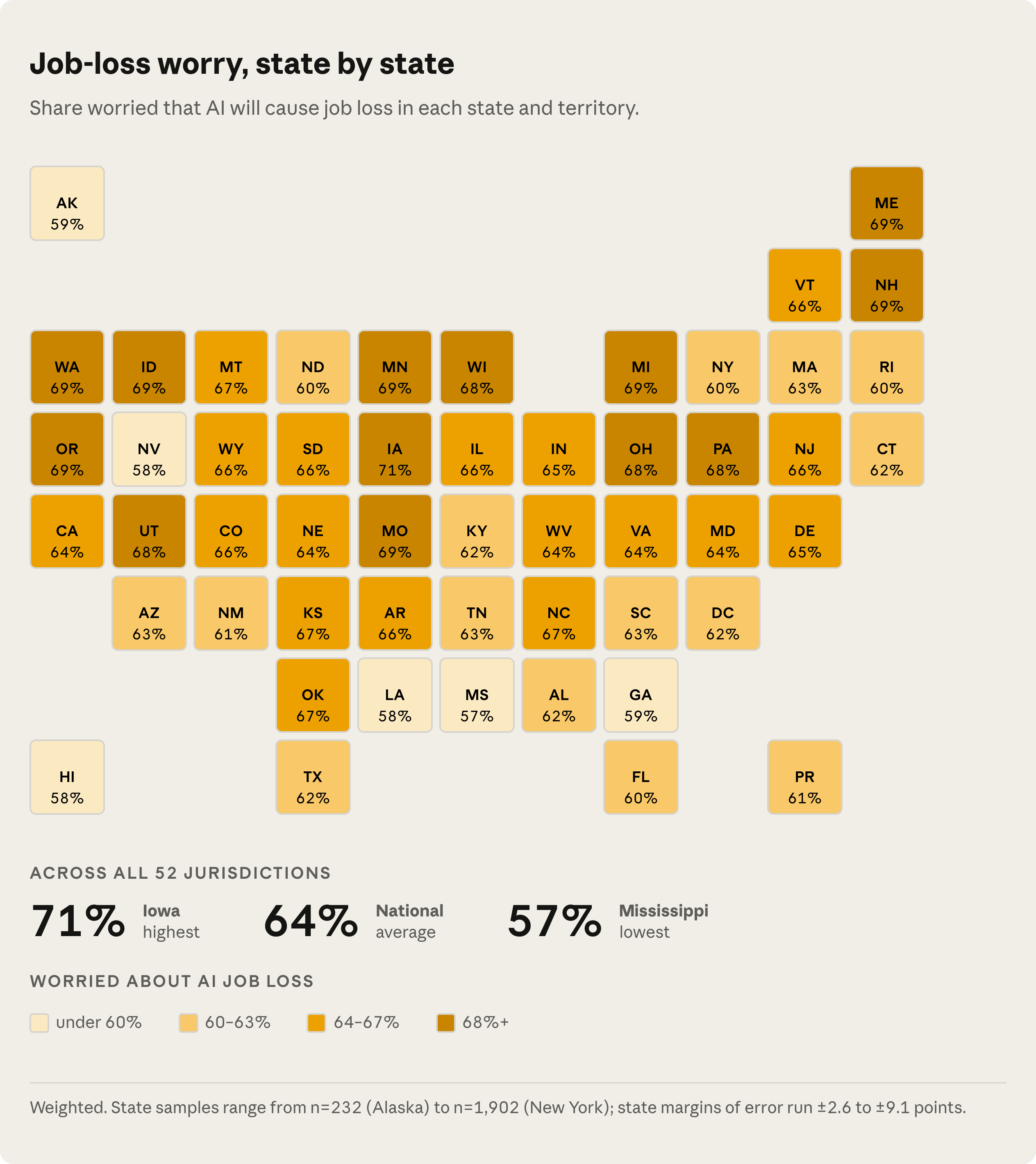
- AI-induced job loss was the most common fear in every state, held by 64% of Americans. The second most prominent fear was cognitive dependency (56%), followed by misinformation (52%).
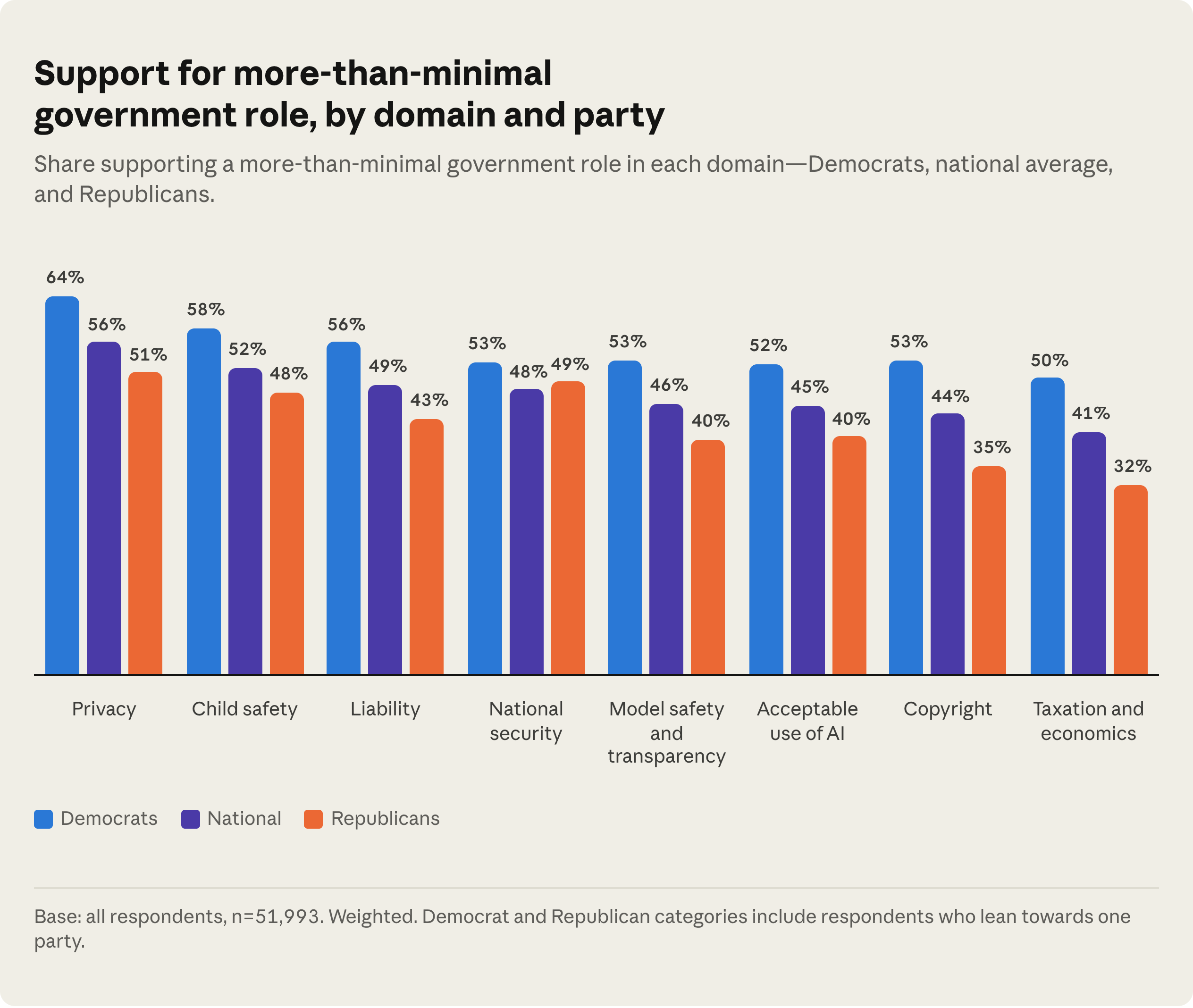
- Support for government intervention in AI was high: over 70% of the Americans we surveyed believe the government should play a role in regulating AI, and this support was bipartisan. People were most eager to see the government take action on AI in the areas of privacy (56%), child safety (52%), and liability for harm (49%).
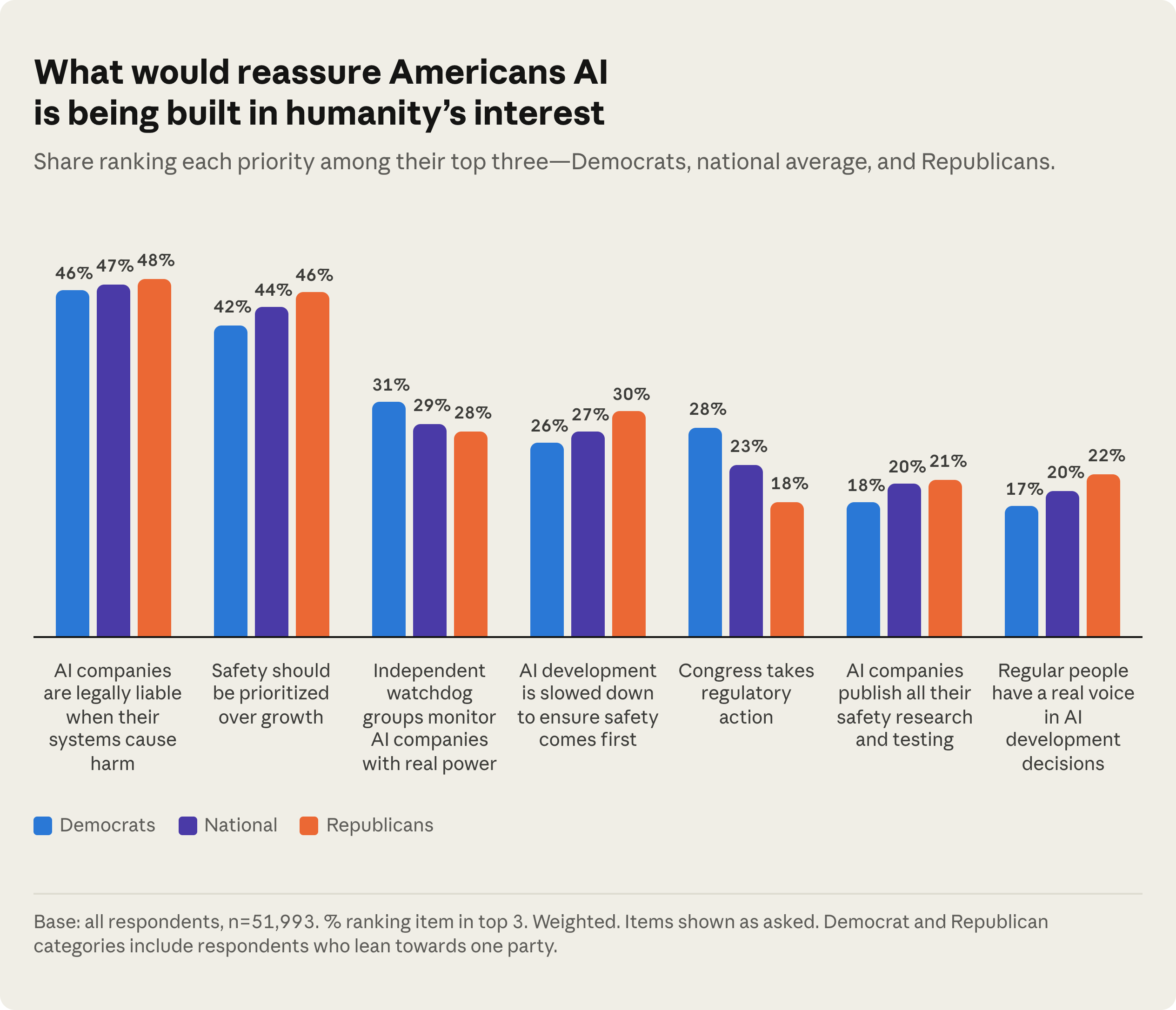
- When asked what would best ensure AI is of benefit to humanity, Americans ranked holding AI companies legally liable for harm (47%) and prioritizing safety over growth (44%) as the highest leverage actions.
- Only 15% of Americans said they trust AI companies to make decisions about how AI is developed and used.
Strikingly, on most questions, AI did not heavily divide Americans along typical partisan, geographic, or educational lines. In general, there was broad consensus across topics: Americans are eager to realize AI’s promised benefits but fear the disruption it may bring, and they want accountability from the companies building it. To the extent we saw disagreement, it was largely only in the intensity of people's views.
This research builds on other work underway at Anthropic to understand how people use Claude and think about AI development. We recently conducted a global qualitative study of 81,000 Claude users through Anthropic Interviewer, our tool for conducting in-depth interviews at scale. We also regularly release data from the Anthropic Economic Index, which draws on anonymized Claude usage data to show how people around the world are employing AI. The Anthropic Public Record survey marks the first time we’ve spoken to the general public, allowing us to reach non-users of AI and better understand how attitudes differ across demographic lines.
The Anthropic Public Record will be repeated regularly, evolving in scope as new topics become more salient, and allowing us to track how the public’s attitudes towards AI change as model capabilities advance and adoption deepens. In the future, we plan to expand outside the US.
Method in brief
We conducted a nationally representative online survey in November and December of 2025 of 51,993 Americans, sourced from YouGov and weighted to US Census benchmarks. State samples range from n=232 (Alaska) to n=1,902 (New York), with state-level margins of error between ±2.6 and ±9.1 percentage points. More details on the methodology are available in the Appendix.
What Americans hope AI will deliver
We asked Americans to choose their top three hopes for AI from a list of 17. Curing disease topped the list, with 48% of respondents putting it in their top three, 12 percentage points ahead of the second most commonly selected item, helping people with disabilities, at 36%. Items like therapy and reducing loneliness—or hopes that AI might substitute for human contact—were the lowest ranked of the options presented.
What Americans fear
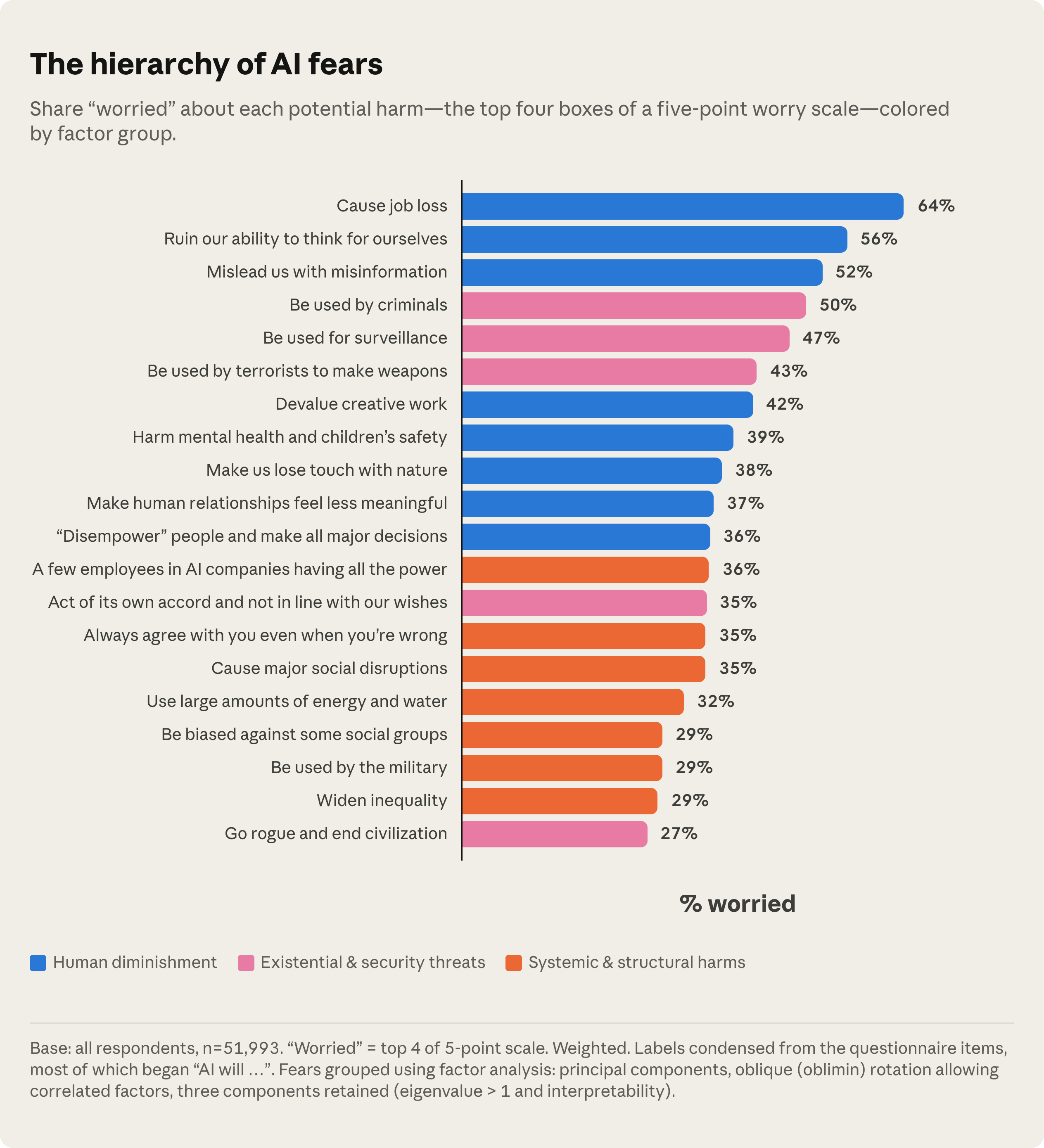
We gave respondents a list of 20 possible harms from AI, asked them to flag each one they felt personally concerned by and then to rate each on a five-point scale of how worried they were. We considered any response of 2 (somewhat worried) or higher as worried. (This methodology differs from the question above, in which we asked participants to rank only their three hopes; the numbers aren’t comparable.)
Job loss was by far the most common concern, held by nearly two-thirds (64%) of Americans. This was followed by cognitive dependency—in which AI integration leaves people unable to think for themselves—at 56%, and misinformation at 52%. Job loss and cognitive dependency were also among the top fears in our qualitative study of 81,000 people using Claude.
The most common harms tended to be near-term and concrete: job loss, cognitive dependency, misinformation, criminal use, and surveillance. Each of these fears also predates AI, having precedent in an earlier technology—for example automation causing job loss, smartphones fostering dependency, and social media spreading misinformation. In general, Americans tended to be more concerned with the misuse of AI than AI misalignment, citing criminal use, surveillance, and terrorism more frequently than, for example, AI “going rogue”.
For all but three of the harms we mentioned, a majority of respondents described themselves as “not worried,” but there was no potential harm about which less than 1/4 of Americans had at least some concern.
Patterns with job loss
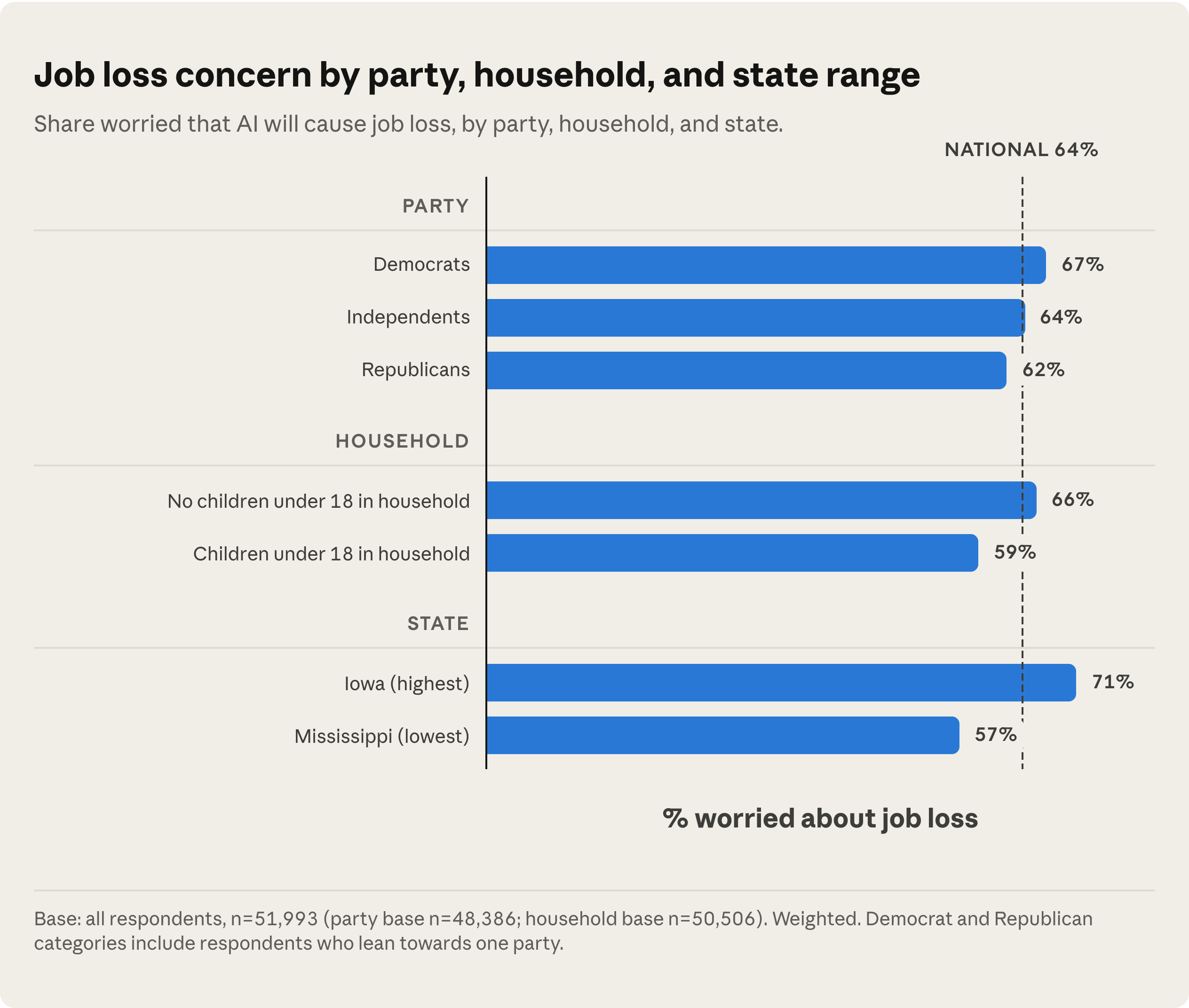
Sixty-four percent of Americans are worried that AI will displace jobs. The concern is remarkably evenly distributed. It is the top-ranked fear among Democrats (67%) and Republicans (62%), in households with children (59%) and without (66%), and in every state from Iowa at the high end (71%) to Mississippi at the low end (57%).
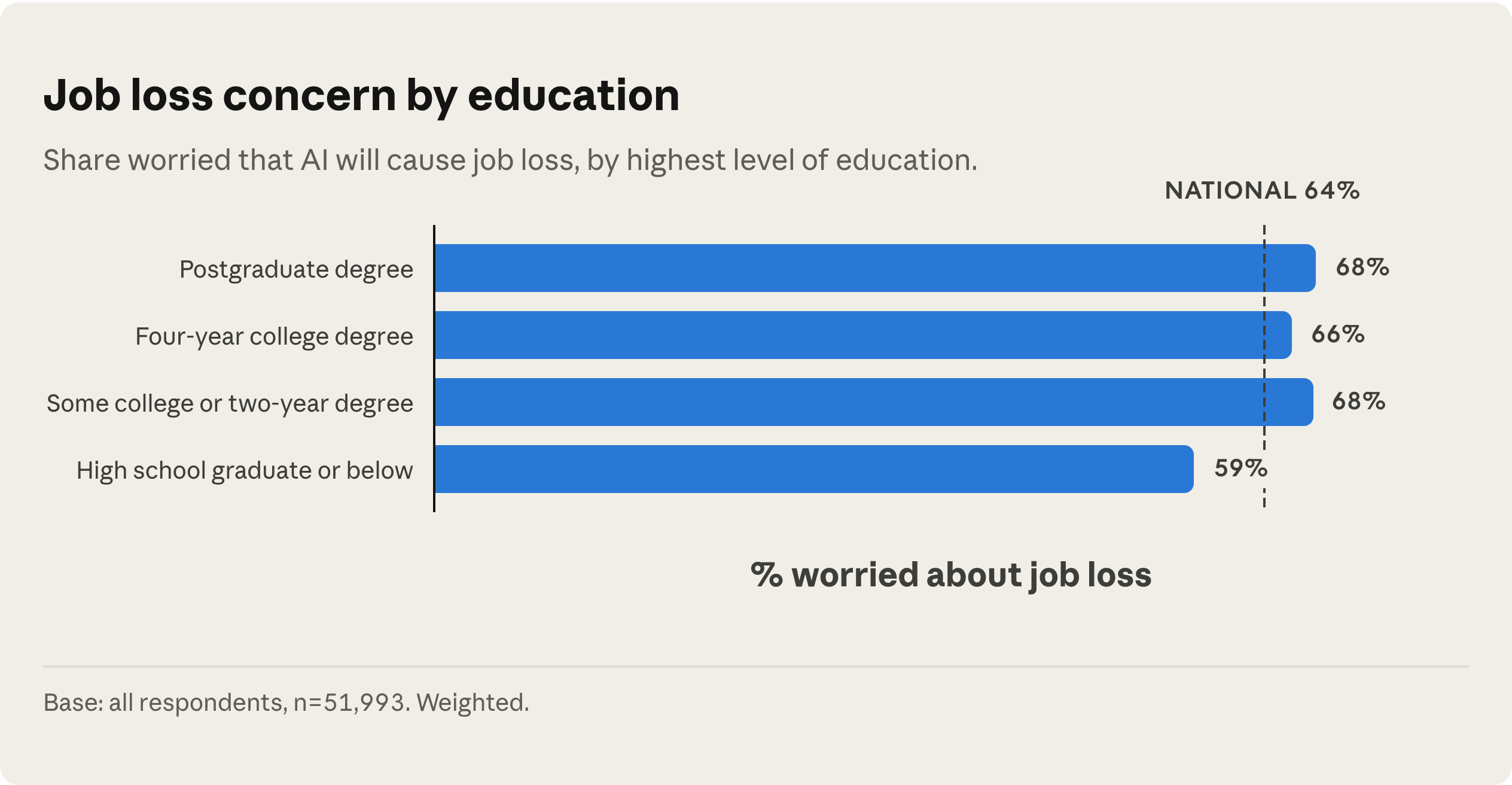
Job loss concerns are higher among Americans with more education
Concerns over job displacement rise with a respondent’s education level. Americans with postgraduate degrees are nearly ten percentage points more worried about job loss than those with a high school education or less. The workers most worried about displacement, in other words, are the ones whose work already overlaps more closely with what AI is being asked to do—a finding reflected in our economic research team’s analysis of our global Anthropic Interview study.
Fear of job loss is heightened among those who use AI least
At the same time, people who use AI at work every day are notably less worried about job loss than people who don’t use AI at all: 54% versus 70%.
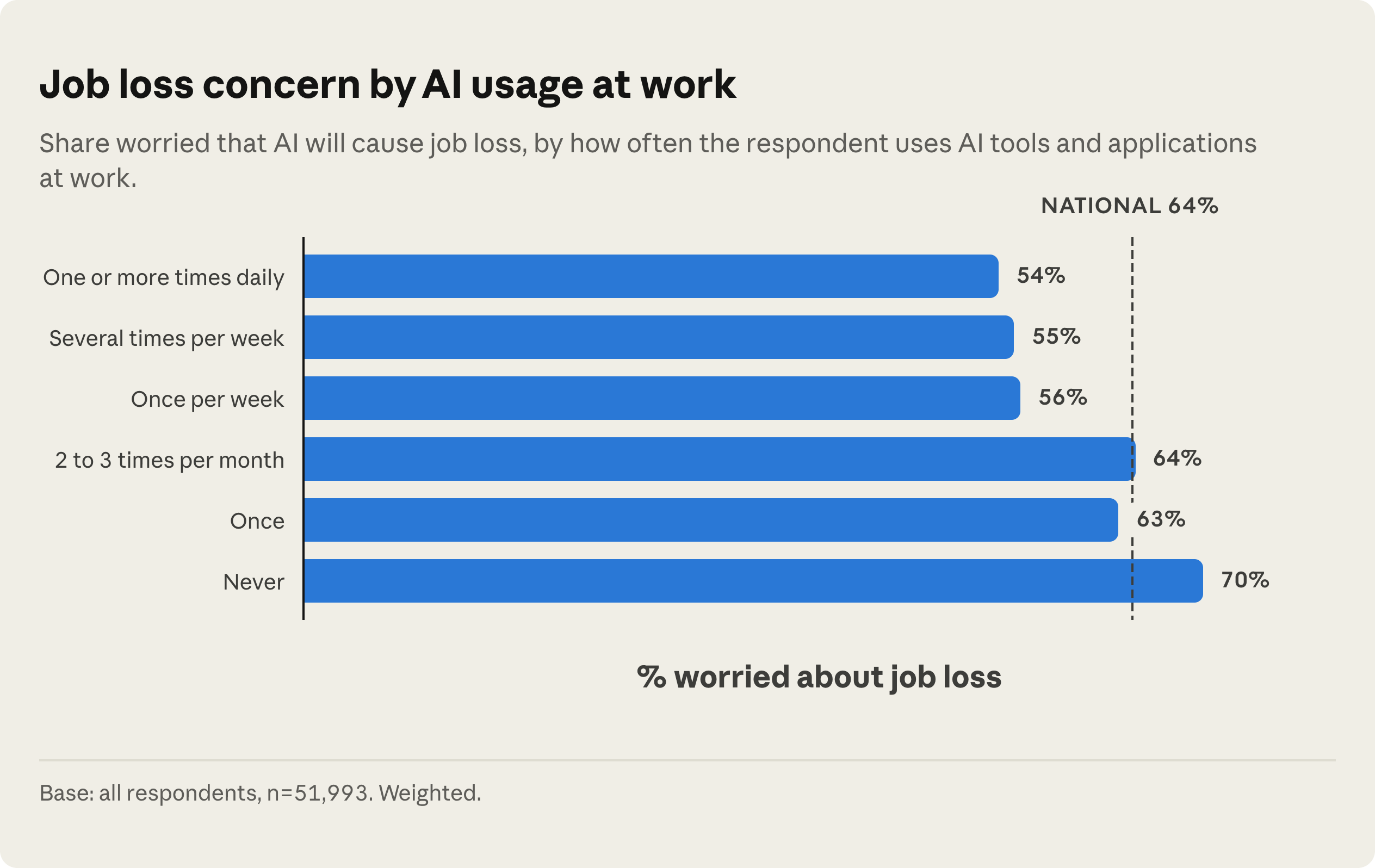
There are many possible explanations for this trend. Hands-on experience with AI may help people develop skills and fluency that allow them to augment rather than automate parts of their job, making job loss seem like less of a looming threat. Hands-on experience may also reveal AI's limitations. Likely it’s a combination of these and other factors.
Perceived capabilities and acceptance of AI at work
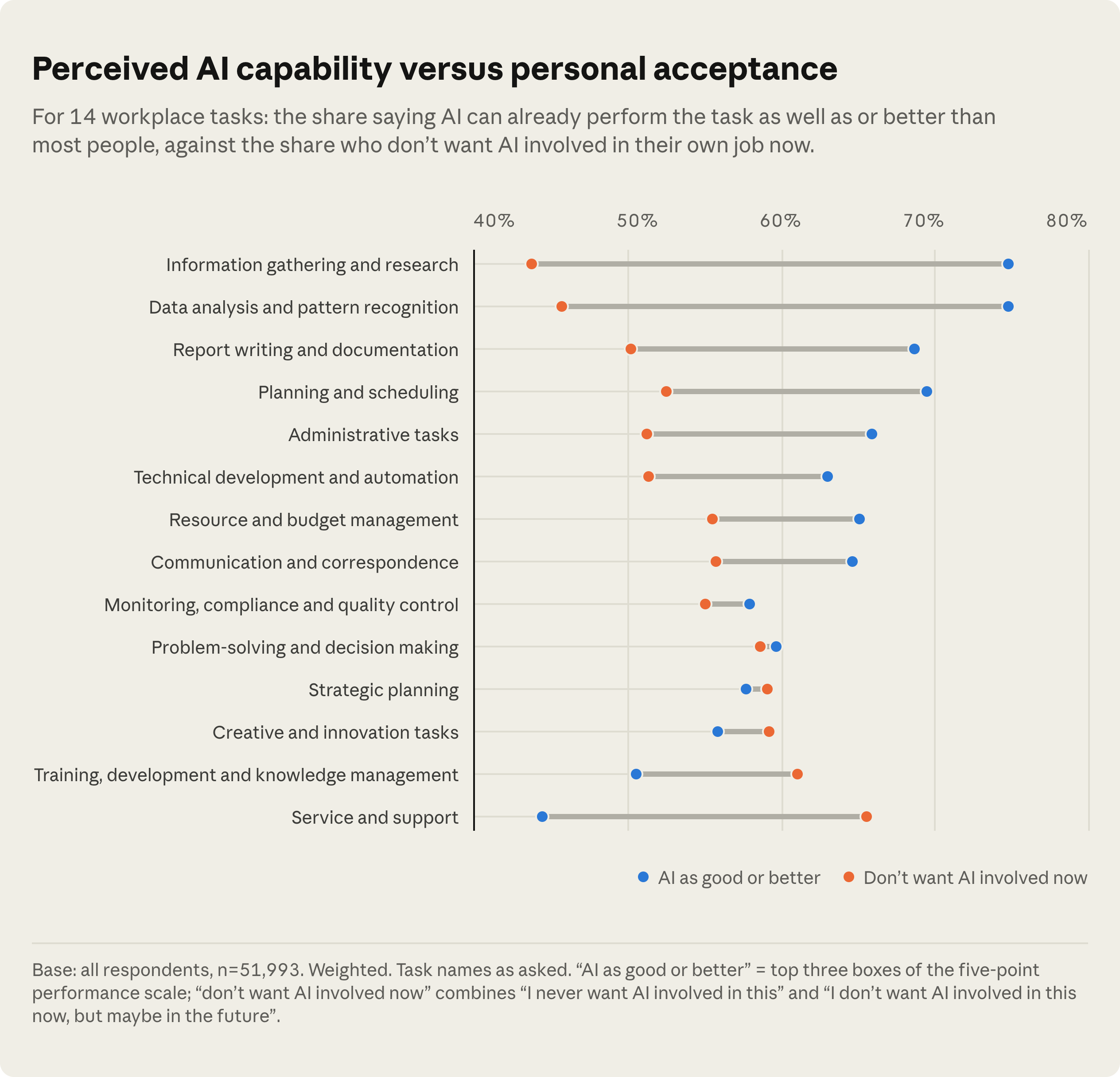
We gave respondents a list of 14 workplace tasks and for each asked two questions: “How well do you think an AI tool or application could perform this task today?” and “Thinking about your own job, how much AI involvement would you prefer for each of the following work tasks/purposes?”
Overall assessment of AI capabilities was fairly high. At the high end, 75% of Americans said AI was as good or better than humans on research. At the low end, 44% said AI was as good or better in service and support.
On most tasks, a majority of Americans did not want AI involved in their jobs, and even on the tasks they rated AI most capable—such as research and data analysis—nearly half of respondents said they want no AI involvement in their own work. However, acceptance of AI involvement within the workplace seems to move in lockstep with perceived capabilities: the more competent AI is perceived to be in a given domain, the more likely people are to be willing to use it.
Cognitive dependency is an anticipatory fear
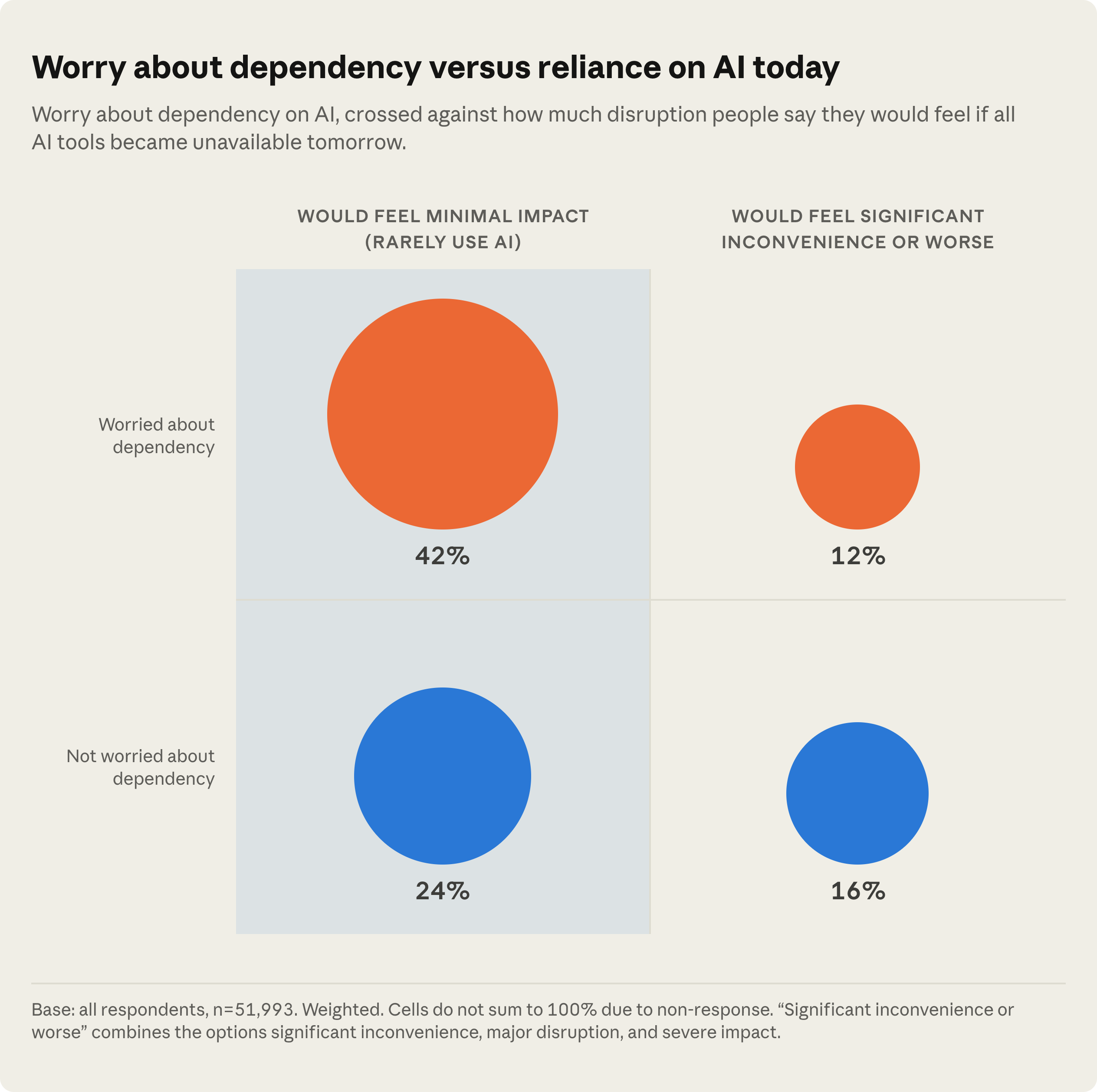
The second most common fear in our survey was cognitive dependency on AI. To better understand whether people might actually be experiencing dependency, we asked respondents how much disruption they would feel if AI became unavailable tomorrow, then compared the answers of those worried about dependency with those unconcerned by it.
So far, cognitive dependency appears to be a mostly anticipatory fear: of the 56% of Americans who expressed some worry over dependence, only roughly 1/5 would feel significant disruption if AI became unavailable. Conversely, among the 44% who don’t worry about dependency, a higher percentage—roughly 1/3—would feel significant disruption.
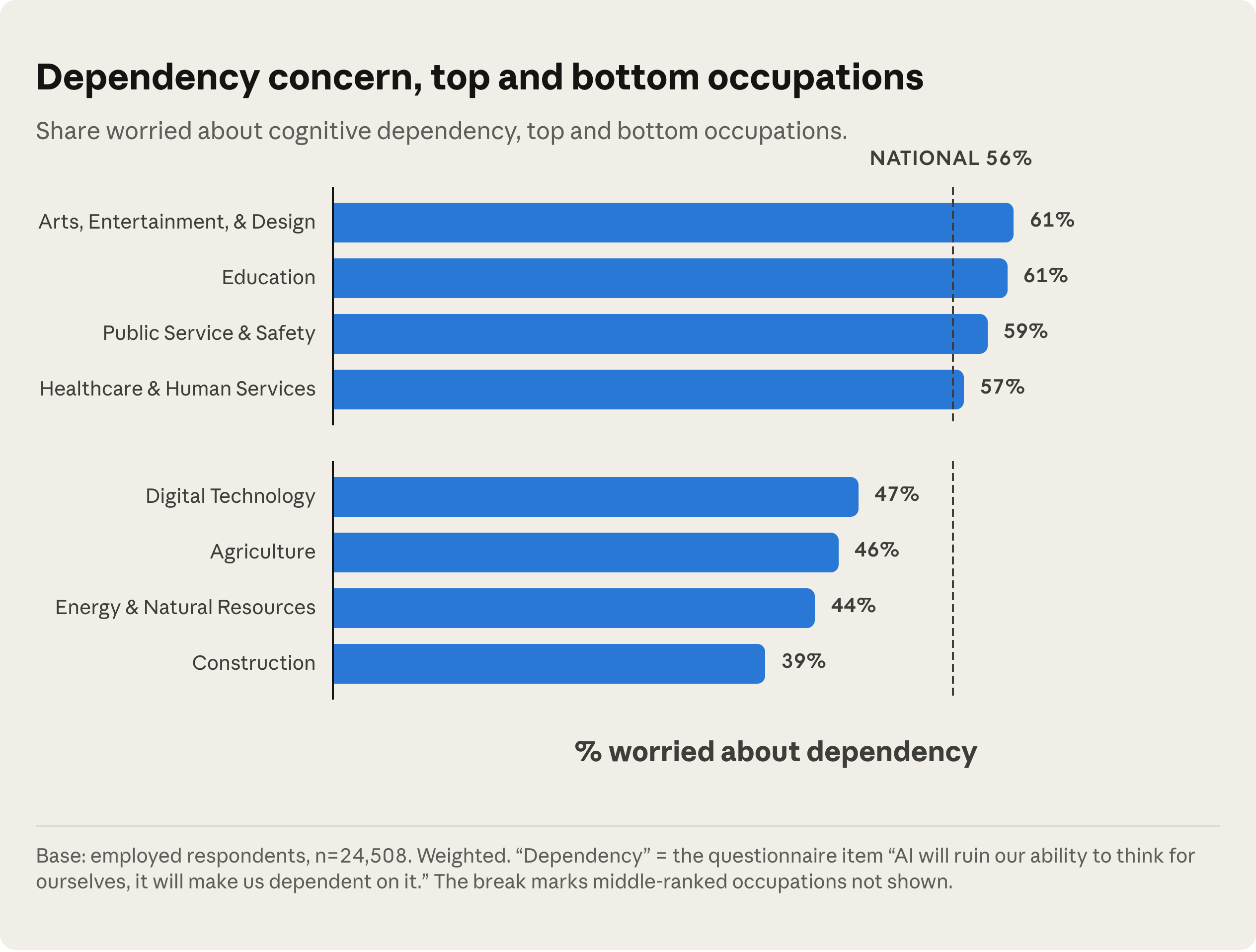
Our qualitative research among 81,000 Claude users found that educators were 2.5 to 3 times more likely than average to report having witnessed cognitive atrophy firsthand, presumably in their students. In Anthropic Public Record, educators are likewise among the occupations most worried about dependency, second only to people working in arts and design.
As with job loss, the dependency fear falls steadily with usage. Americans who use AI daily at work are 16 points less worried about dependency (46%) than those who never do (62%).
What the heaviest AI users tell us
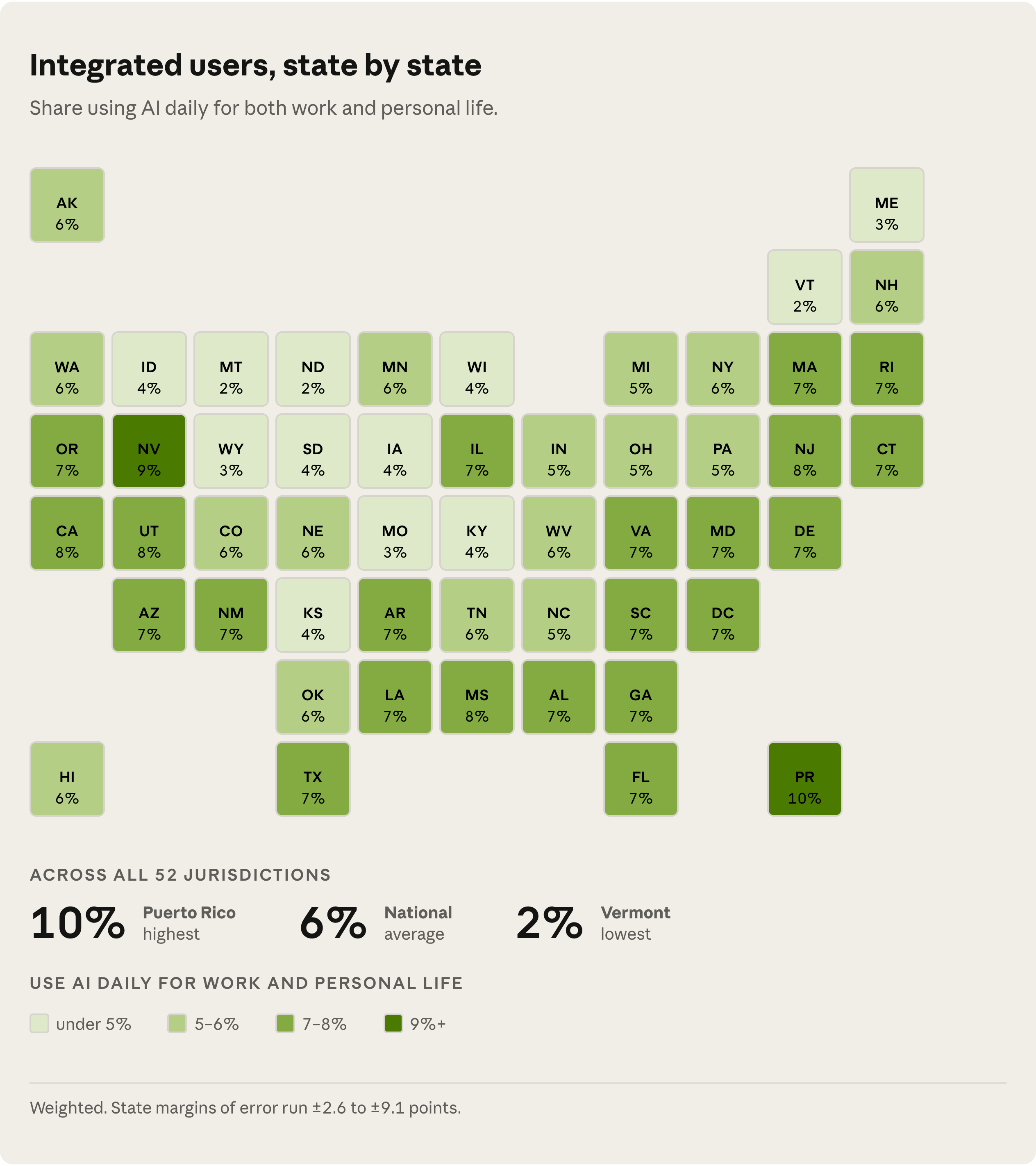
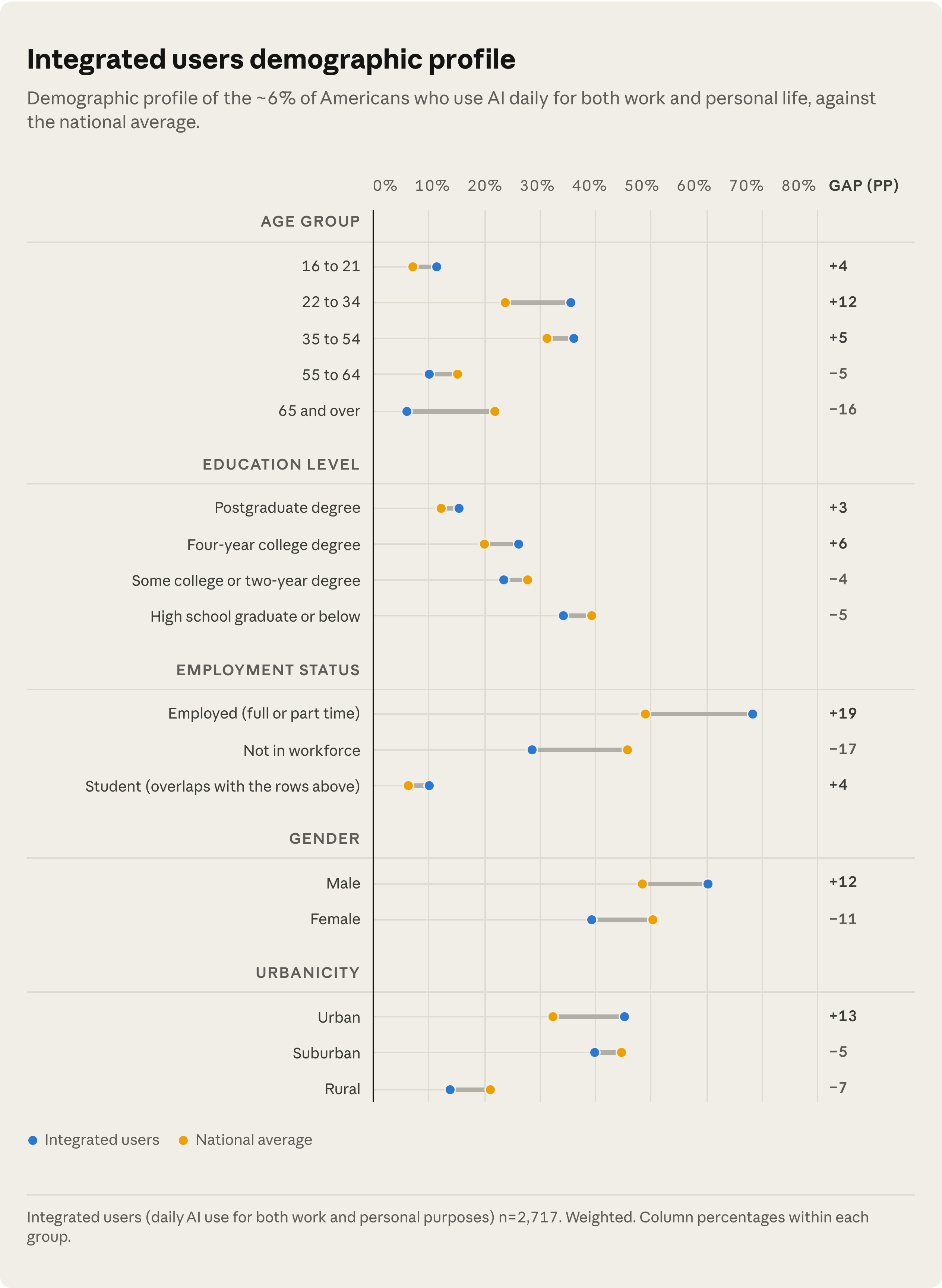
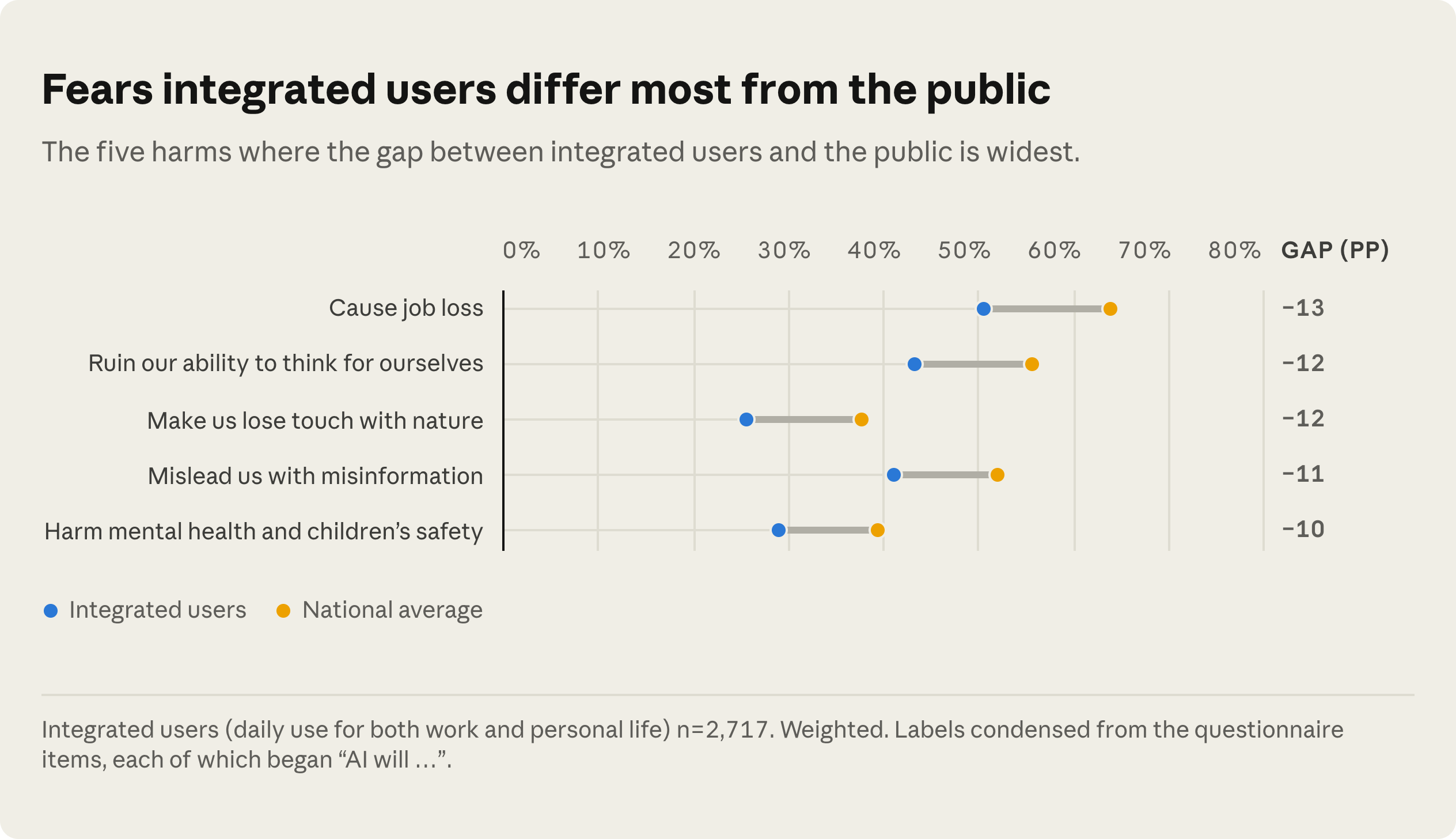
As of late 2025, about 6% of Americans used AI every day for both work and personal life. These integrated users are a preview of what more intensive adoption of AI looks like, and possibly of where mainstream opinion is headed as adoption grows.
Integrated users skew young, male, urban, employed, and college-educated. Nearly two-thirds describe themselves as people who experiment with new technology before most others or adopt it early once they see its potential, compared to 30% in the general public.
Integrated users are less worried than the general public across each of the harms we listed, though this probably reflects differences in the outlook of early adopters.
What Americans want from AI governance
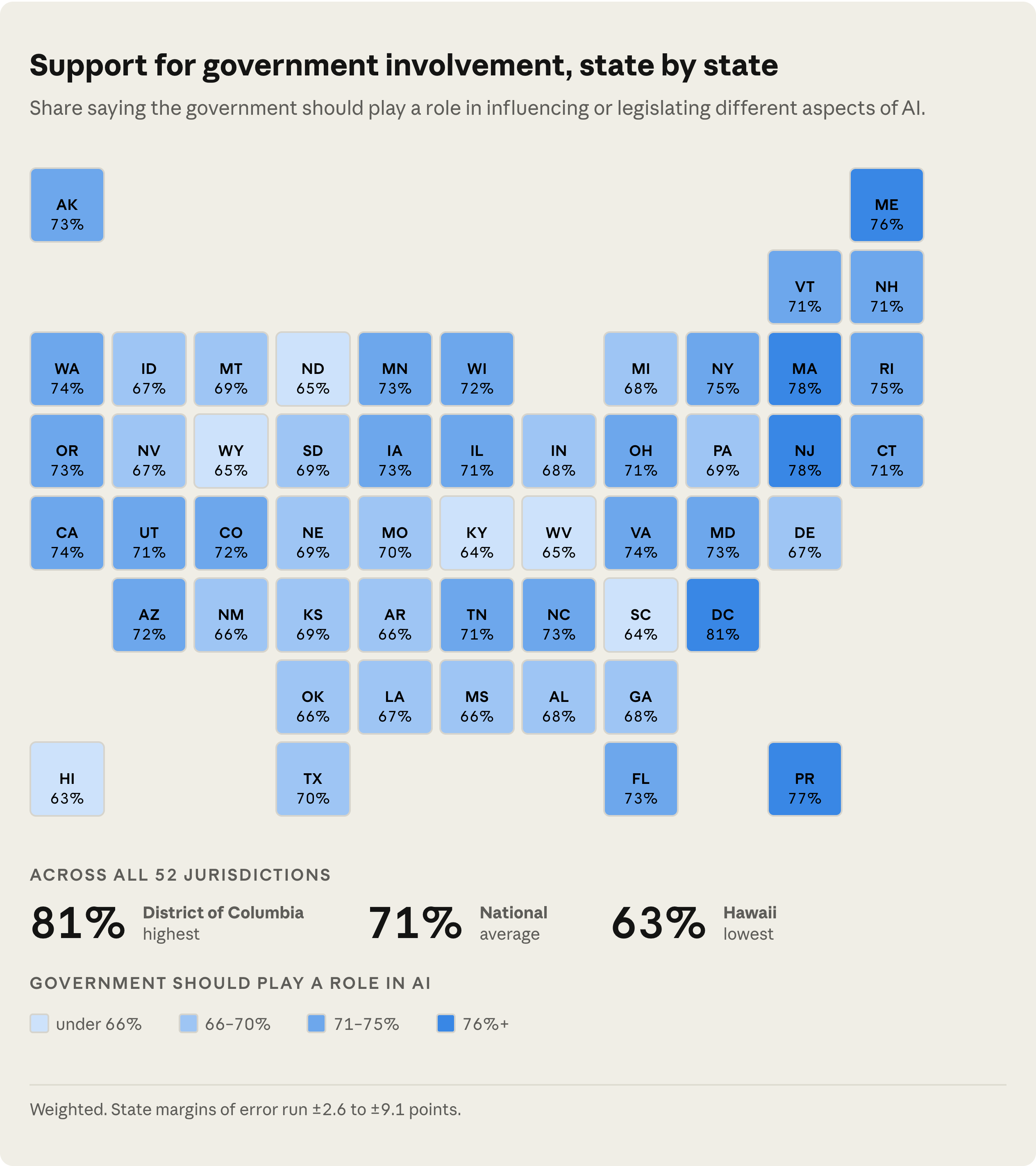
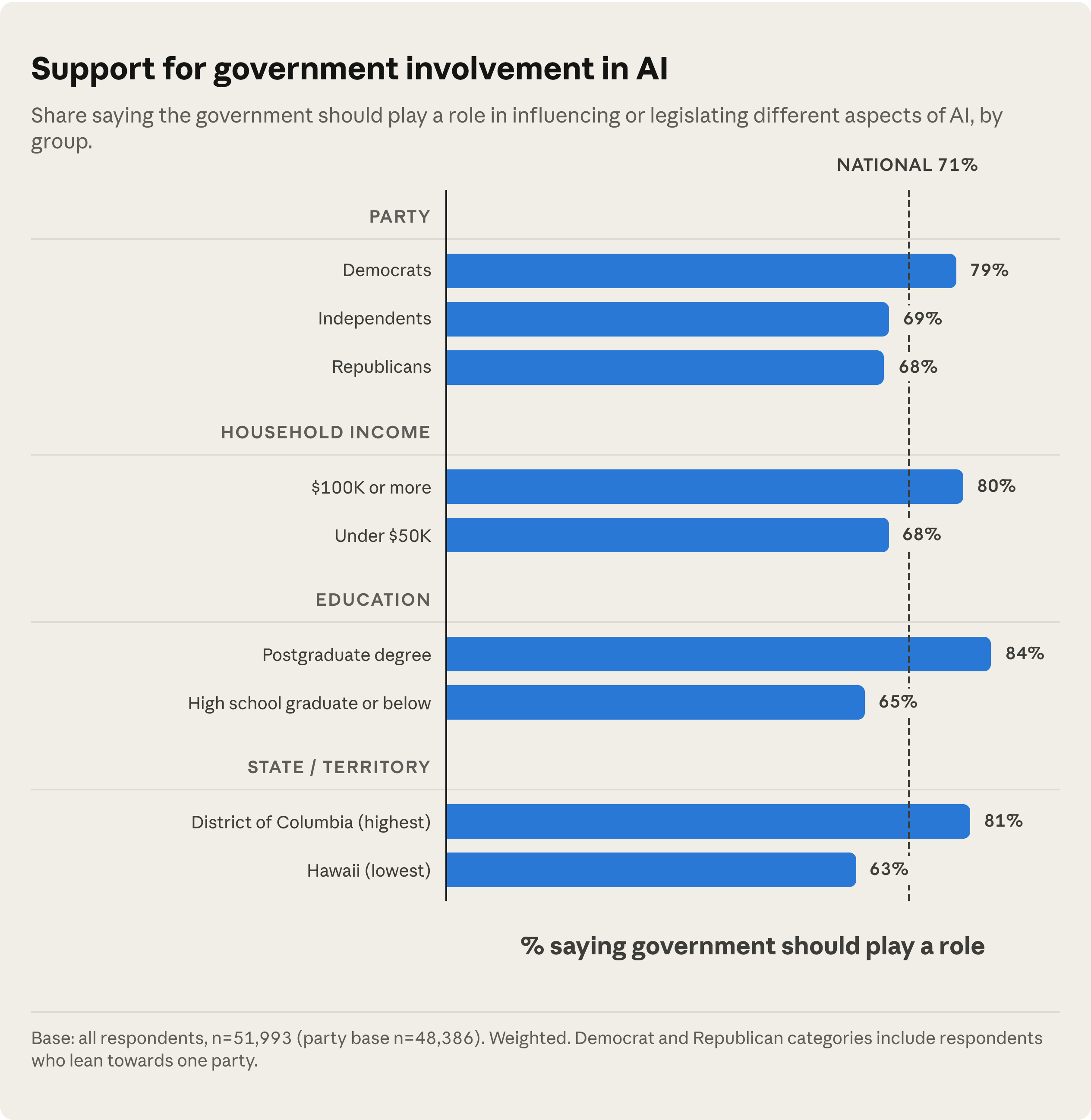
71% of Americans say the government should be involved in the development and regulation of AI. The figure is 79% among Democrats, 68% among Republicans, and 69% among Independents—a bipartisan supermajority. A majority in every state and territory we surveyed supports government involvement in AI, from 81% in the District of Columbia to 63% in Hawaii.
Where Americans want government to act
We then asked about eight specific domains, and how heavily the government should be involved in each. Only two—privacy and child safety—draw outright majority support for more than a minimal role. National security, meanwhile, has the narrowest partisan gap of any domain, just three points between Democrats and Republicans.
What Americans want from the industry
When we asked what should happen to ensure AI is developed in humanity's interest, Americans converged on two answers: hold AI companies legally liable for harm (47% chose it among their top three) and prioritize safety over growth (44%). Independent watchdogs with real power (29%) and slowing AI development for safety (27%) followed.
The trust deficit
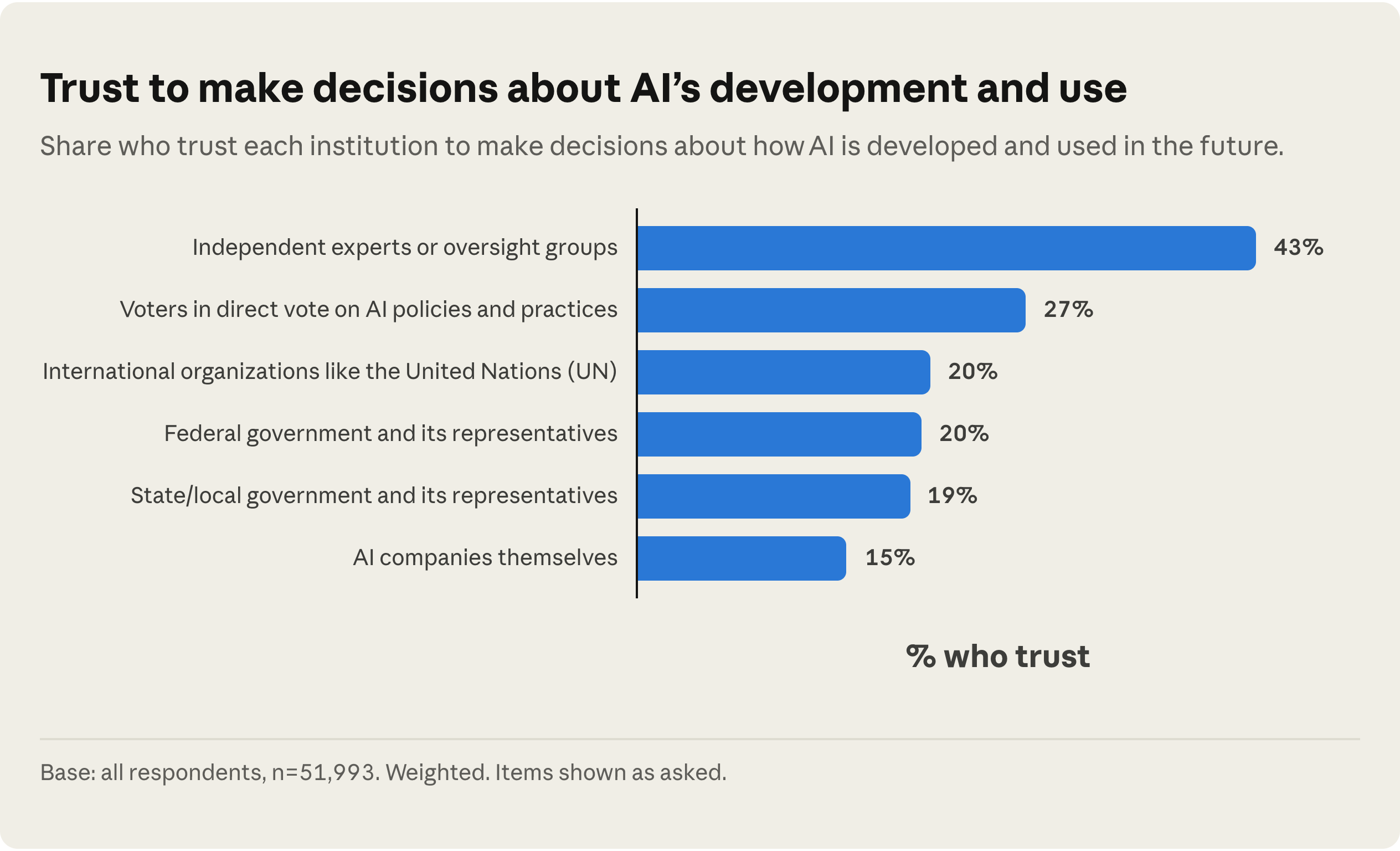
Only 15% of Americans said they trust AI companies to make decisions about how the technology is developed and used. That was the lowest figure for any institution we tested, below the federal government (20%), state and local government (19%), and international bodies (20%), and far below independent experts (43%).
Integrated users have the same appetite for regulation and oversight
Integrated users were more trusting of every institution we asked about, including AI companies—and were markedly less inclined to say AI development should be slowed or stopped. However, they also support government involvement on AI at essentially the national rate (74% versus 71%), and across the eight specific governance domains we tested, their preferences are nearly indistinguishable from the public's.
Anthropic initiatives and what comes next
Public input is critical to ensuring that powerful AI serves humanity’s interests. Anthropic Public Record, Anthropic Interviewer, the Anthropic Economic Index, and many of our other research projects are all efforts to gain greater understanding and input from the public about how to make the AI transition go well.
We recently announced several policy frameworks relevant to these findings. Our Advanced AI Framework proposes mandatory independent safety testing for frontier models, transparency requirements, and government authority to block or recall dangerous AI deployments. Our Economic Policy Framework lays out how governments can prepare for AI's economic impacts—minimizing job displacement where possible, and supporting workers so that AI's benefits are broadly shared.
The direction AI takes should not be set only by the companies building it. The more clearly the public’s hopes and concerns are measured, the better we—and other companies—can meet them.
Appendix: Methodology
Population and mode: Anthropic Public Record is an online survey of the US late-teen and adult internet population, age 16 and over, resident in the fifty states, the District of Columbia, or Puerto Rico. Fieldwork was conducted by YouGov from its online panel between November 1 and December 11, 2025.
Sample design: The study was designed as 52 parallel state and territory samples with a target of approximately 1,000 completes per state (approximately 500 in Montana, North Dakota, South Dakota, Wyoming, Vermont, and Puerto Rico). Quotas were set within each state on age, gender, education, and race/ethnicity. The achieved sample is 51,993 completes, with state sample sizes ranging from 232 (Alaska) to 1,902 (New York).
Weighting: Data are weighted to be representative of the US resident population age 16 and over on state, age, gender, education, and race/ethnicity. Weights are normalized to the achieved sample size (mean 1.00, sum 51,993).
Margin of error: The national margin of sampling error is ±0.6 percentage points at the 95% confidence level for a proportion of 50%. State-level margins of error range from ±2.6 points (California, New York, Texas) to ±9.1 points (Wyoming). Margins of error for subgroups are larger.
Reporting conventions: All percentages in this report are weighted. Unless noted otherwise, percentages use the full segment as the denominator (respondents who answered "don't know" or skipped remain in the base). "Worried" on the fears battery is the top four boxes of a five-point worry scale. "As good or better" on the capability battery is the top three boxes of a five-point performance scale. "Integrated users" are respondents who report using AI one or more times daily for work and one or more times daily for personal purposes (unweighted n=2,717). Party affiliation groups include leaners.
Limitations: Anthropic Public Record captures what Americans believed about AI in late 2025. We are treating it as a baseline.