SUMMARYNVIDIA is showcasing major AI and robotics advances at GTC Taipei during COMPUTEX, including updates on AI factories, scaling infrastructure, agentic AI, and physical AI. The company also won multiple Best Choice Awards for Vera Rubin NVL72, Jetson Thor, and Alpamayo, highlighting improvements in inference efficiency, edge AI, and autonomous vehicle development. Jensen Huang is set to deliver a keynote in Taipei as the event spotlights new hardware and software for next-generation AI systems.
 blogs.nvidia.com
At NVIDIA GTC Taipei at COMPUTEX, the world’s developers, researchers and industry leaders are converging to dive into the latest breakthroughs shaping every industry, covering topics spanning AI factories and scaling infrastructure to agentic and physical AI and more.
This is the place to find all the latest — stay tuned to the blog for live updates.
Tuesday, June 2, 10:30 p.m. PT 🔗
Build-a-Claw Comes to Taipei, Bringing Long-Running AI Agents
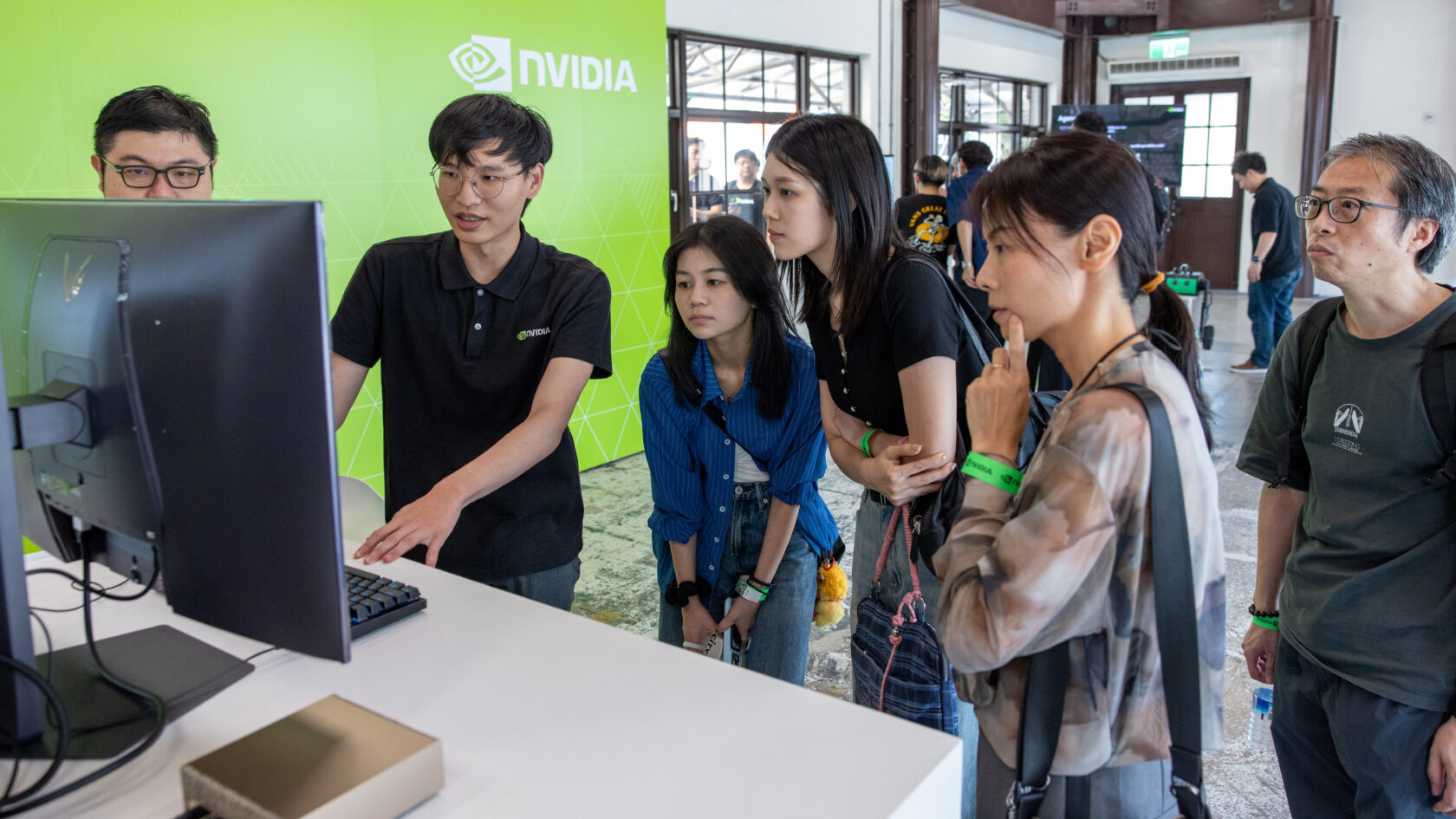
The Build-a-Claw experience has come to GTC Taipei — putting secure, long-running agent development directly into the hands of the APAC developer community.
Build-a-Claw signals how rapidly the developer community and ecosystem are scaling agents. Starting with OpenClaw and Hermes Agent, attendees configured their claw’s persona, added agent skills and set its schedule. Then, they used NVIDIA NemoClaw blueprints and the NVIDIA OpenShell runtime to deploy their agent safely and securely for their environment.
Claws, aka long-running agents, are a class of AI systems that go beyond mere prompt-answering. Unlike agents that complete a single task and vanish, claws persist: They work toward a goal, adapt when they hit obstacles, surface status updates and keep executing in the background even after a developer steps away.
They’re the engine behind intelligent enterprise automation, agentic commerce and autonomous infrastructure — and building them right demands more than clever architecture. It demands a secure runtime.
NVIDIA NemoClaw combines flexible support for agent harnesses — aka agent orchestration frameworks — with NVIDIA OpenShell as the secure runtime. It works with harnesses such as OpenClaw and Hermes Agent, giving developers a hardened, sandboxed foundation for claw development.
OpenShell provides the runtime security boundary: isolating agent workloads, enforcing policy and keeping autonomous execution within guardrails that developers and their organizations can trust. NemoClaw blueprints further lower the barrier to entry by giving builders ready-to-adapt patterns for creating secure, enterprise-ready agents.
Tuesday, June 2, 5:00 p.m. PT 🔗
NVIDIA Isaac GR00T Accelerates Humanoid Robot Development From Data to Deployment
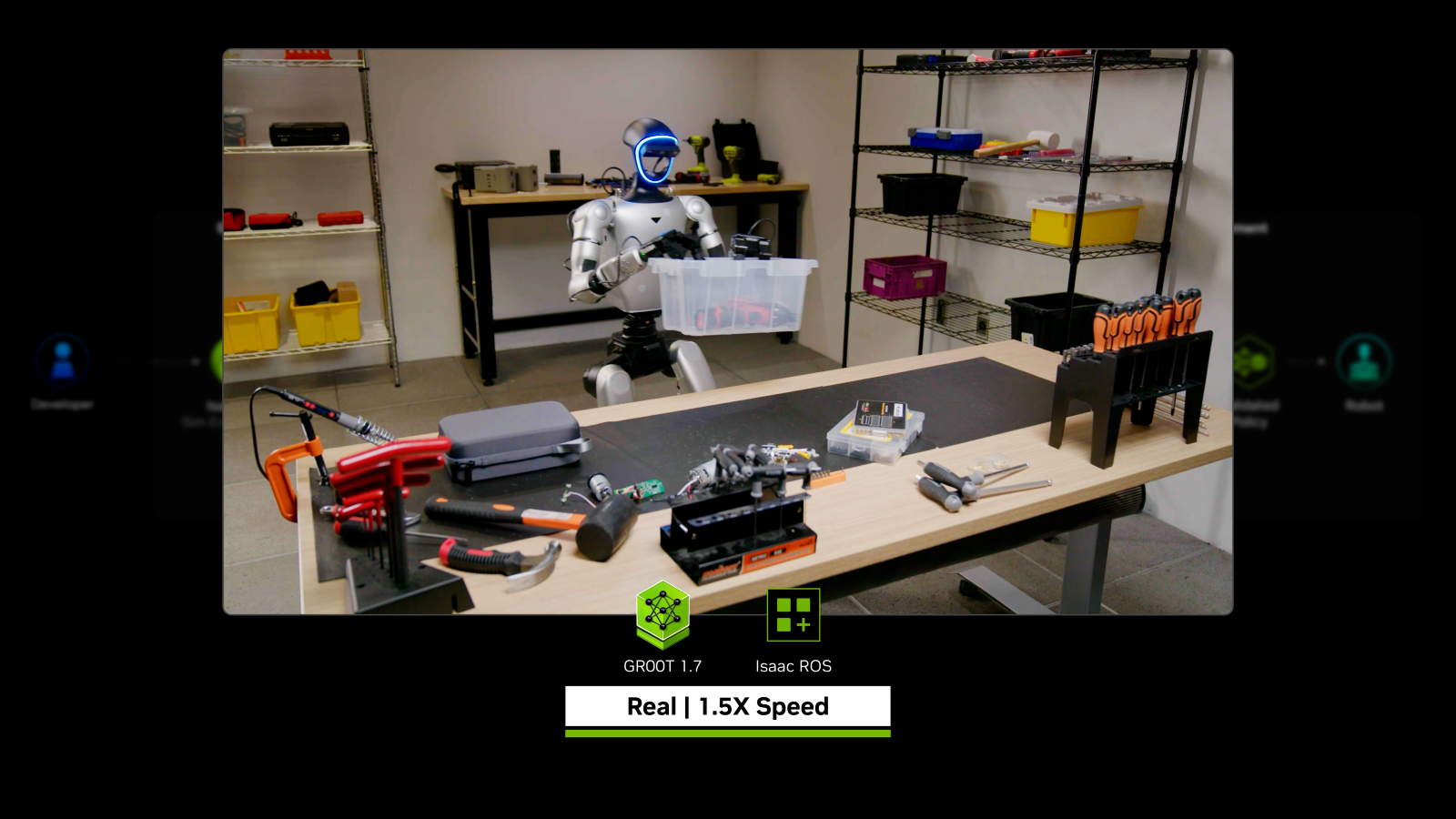
Building humanoids is complex, and progress often depends on how quickly teams can move through the full development loop: collect demonstrations, generate and refine data, train policies, test in simulation, validate the full software stack and deploy on real hardware. Developers today must handle many disconnected tools and handoffs across that workflow.
Major updates to NVIDIA Isaac GR00T, an open, end-to-end development platform for humanoid robots, are accelerating that cycle. The platform unifies technologies including Isaac Teleop, Isaac Lab, Isaac Sim, Isaac ROS, GR00T open models and NVIDIA Jetson Thor for real-time inference and control, giving developers a prescriptive way to move from data to deployment.
Agility, Boston Dynamics, Dyna Robotics, Figure, FieldAI, Noble Machines, Richtech Robotics and Skild AI are using core components of NVIDIA’s humanoid robotics stack to accelerate robot development.
The development flywheel is already gaining momentum. GR00T models have reached 274,000 downloads, while the GR00T X Embodiment Sim dataset has crossed more than 10 million downloads on Hugging Face.
Isaac GR00T Updates Speed Robot Development
Isaac Teleop, now generally available, is an open source framework for real-time robot teleoperation and data capture across simulated and physical robots. It connects extended-reality headsets, gloves, motion trackers and other teleoperation devices to workflows that integrate with Isaac Lab, Isaac Sim, ROS 2 and Isaac ROS, reducing duplicated work.
Leading teleoperation device makers such as PICO support Isaac Teleop natively, and robotics developers including Foxconn and Lightwheel are incorporating it into their training pipelines.
The latest GR00T 1.7 model — pretrained on 20,000 hours of human egocentric data and built on Cosmos Reason 2 as its backbone — enables more complex bimanual and dexterous manipulation tasks, such as selecting a card from a stack and inserting it into a holder. Currently in early access, GR00T 1.7 is integrated with HuggingFace’s LeRobot and available under a commercial license so developers can build and deploy derived models beyond research settings.
Techman Robot uses the GR00T development platform and GR00T 1.7 model to accelerate its development pipeline, bringing AI into real industrial use faster.
Now part of the OpenMDW-1.1 license from the Linux Foundation, future Isaac GR00T open model releases will be available under a single, model-centric license, making it easier for developers to build, customize and deploy GR00T model materials across robotics workflows.
Enactic and Nexuni are integrating GR00T 1.7 to help robots reason, adapt and operate in unpredictable environments like nursing homes and laundry facilities.
In addition, the Isaac Lab 3.0 Developer Preview expands robot learning with richer physics through Newton physics engine integration and multi-GPU scaling for large physical AI experiments. Developers can train policies against more realistic scenarios, including complex mechanisms, materials and environments. Unified actuator models across Isaac Lab and Isaac Sim help reduce mismatches between policy learning and software-in-the-loop testing, exposing issues before full-stack validation or hardware deployment.
Flexion AG has achieved up to a 5x speedup on perceptive workload training using Isaac Lab for humanoid locomotion and manipulation policies.
Isaac Sim 6.0, now generally available, gives developers a simulation environment to validate robot behavior and test the full software stack before deployment. New agent skills help teams automate simulation workflows, while Newton authoring and software-in-the-loop testing let policies trained in Isaac Lab be evaluated against more realistic robot software and physics. The release also adds more than 1,000 simulation-ready graspable assets to accelerate manipulation testing.
RLWRLD developed its RLDX-1 dexterity foundation model with Isaac Sim, while Robotiq has integrated Isaac Sim into its open workflows for tactile sensing to improve contact-rich manipulation. Lyte is working with NVIDIA to connect LyteVision’s real-world multimodal capture with Isaac Sim, OpenUSD, SimReady and NVIDIA Warp workflows, turning captured scenes into SimReady assets and environments for training robot perception and manipulation policies
The final piece of the workflow is deployment. Isaac ROS 4.4 connects learned robot skills from Isaac Sim and Isaac Lab to the ROS 2 software stack, sensors and accelerated compute needed for real-world testing, with new support for extended reality teleoperation, manipulation workflows and Jetson Thor-class hardware.
Developers can explore the NVIDIA Isaac open robotics development platform for the tools, models and compute needed to accelerate humanoid development across the full workflow. The end-to-end validated reference workflow from data to deployment will be available in the second half of this year.
Watch the GTC Taipei keynote from NVIDIA founder and CEO Jensen Huang and explore these physical AI sessions.
See notice regarding software product information.
Tuesday, June 2, 3:00 p.m. PT 🔗
NVIDIA Brings Secure Agent Workspaces and Confidential Computing to AI Factories
Enterprise AI is rapidly evolving from conversational chatbots to persistent, autonomous agents capable of reasoning, writing their own software tools, executing complex cross-system workflows and driving tangible business outcomes.
Moving these agentic capabilities from pilot to production triggers tremendous growth in token generation and fundamentally rewrites the enterprise model for security, compliance, infrastructure and cost. To scale safely, organizations need AI factories — built for secure, trusted and efficient AI production.
To help enterprises realize these capabilities, NVIDIA is publishing new, comprehensive reference architectures: Secure Agent Workspaces, and Confidential Computing as Confidential VMs and Confidential Containers. At GTC Taipei this week, NVIDIA also demonstrated confidential computing for AI with Protopia AI — featuring NVIDIA Confidential Computing protecting model IP and Protopia’s Stained Glass Transform model protecting sensitive data across the entire inference data path.
Evolving Governance Requirements for Autonomous AI Workers
Legacy IT security controls — static credentials, network allowlists and standard role-based access — were not designed for autonomous agents. Securing the AI factory requires a paradigm shift to runtime-enforced, policy-driven guardrails. Enterprises need secure agent workspaces — persistent, single-user environments accessed via enterprise single sign-on.
Secure agent workspaces are governed by these core principles: The agent runs inside the managed workspace rather than the endpoint, persists beyond the user session for long-running autonomous work and never receives raw credentials. Instead, all access is mediated through trusted brokers, and any consequential actions require human approval.
The Growing Need for Zero-Trust Architectures
Agentic AI is reshaping enterprise economics. As agents run continuously and orchestrate complex workflows, efficiency is increasingly measured by cost per token, throughput and GPU utilization. At the same time, sensitive and regulated enterprise data cannot always move to centralized clouds, driving organizations to bring AI to their data and creating a major opportunity for on-premises AI factories.
To do this safely, enterprises must protect both data in use and model weights. NVIDIA Confidential Computing provides the hardware-based foundation for zero-trust AI, enabling secure deployment of frontier and proprietary models in on-premises or sovereign environments while preserving model IP and accelerated computing performance.
Explore the reference architecture to secure AI factories and safely deploy autonomous agents at enterprise scale, as well as Protopia AI’s Stained Glass Transform model to preserve data privacy across the entire data path.
Tuesday, June 2, 1:30 p.m. PT 🔗
Touring the AI Ecosystem on the COMPUTEX Show Floor
NVIDIA founder and CEO Jensen Huang visited partner booths at COMPUTEX and met leaders including Acer chairman and CEO Jason Chen, ASUS chairman Jonney Shih, MediaTek CEO Rick Tsai and Quanta Computer vice chairman and president C.C. Leung.
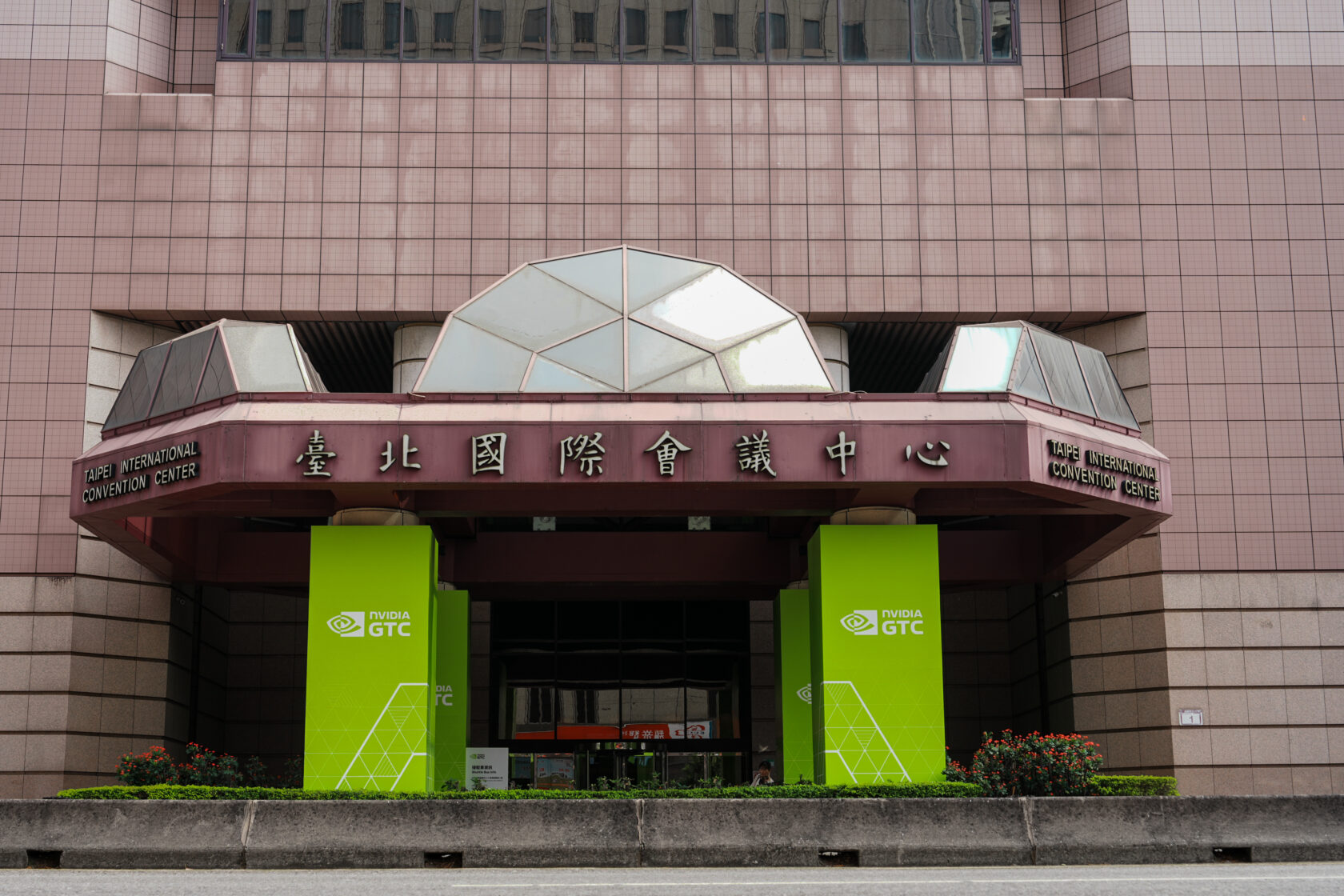
In parallel, GTC Taipei is taking place through Thursday, June 4, at the Taipei International Convention Center, featuring 60+ sessions, hands-on workshops, a Build-a-Claw event and live demos showcasing cutting-edge AI developments.
Monday, June 1, 6:00 p.m. PT 🔗
NVIDIA AI for Media Expands Real-Time AI for Live Video Pipelines and Post-Production Workflows

New NVIDIA AI for Media technologies — announced at GTC Taipei at COMPUTEX — are giving broadcasters, streaming platforms and developers real-time building blocks for live production, localization, content analysis and synthetic video detection.
The media industry produces an estimated 18 million hours of live programming annually, captures 150 million camera hours per year and sits on more than 250 exabytes of archived professional video. Most of that content remains expensive to surface, slow to localize and difficult to analyze at scale.
The new AI for Media capabilities — deployable on premises via NVIDIA RTX PRO workstations or in the cloud — aim to change that, enabling automated localization pipelines, searchable archive metadata and AI-assisted live and post-production workflows.
These updates include:
- Multilingual LipSync —which synchronizes on-screen lip movements to dubbed audio in real time and now includes French, German and Spanish support.
- The enhanced Active Speaker Detection capability tracks speakers in camera feeds, making it easier for production teams to automate highlighting the right face at the right moment.
- Enhanced NVIDIA RTX Video Super Resolution and RTX Video Frame Generation capabilities use AI to upscale and smooth video output on RTX-powered systems.
- A set of SMPTE ST 2110-compliant NVIDIA NIM microservices built for live, IP-based media pipelines move media enhancement from post-production into the domain of real-time broadcast infrastructure. These NIM microservices include Active Speaker Detection, Video Super Resolution, LipSync and Studio Voice. SMPTE ST 2110 is an industry-specific suite of standards for audio, video and data streaming.
- NVIDIA Synthetic Video Detector, a NIM microservice that identifies AI-generated video with roughly 92% accuracy in as little as 22 milliseconds. As synthetic media floods online platforms, the detector gives newsrooms and content platforms a tool to flag manipulated footage before it reaches audiences.
Learn more about NVIDIA AI for Media, explore the NIM microservices catalog and catch a live demo of these capabilities at COMPUTEX.
See notice regarding software product information.
Monday, June 1, 5 p.m. PT 🔗
NVIDIA Spectrum-X Ethernet Photonics Ramps to Production
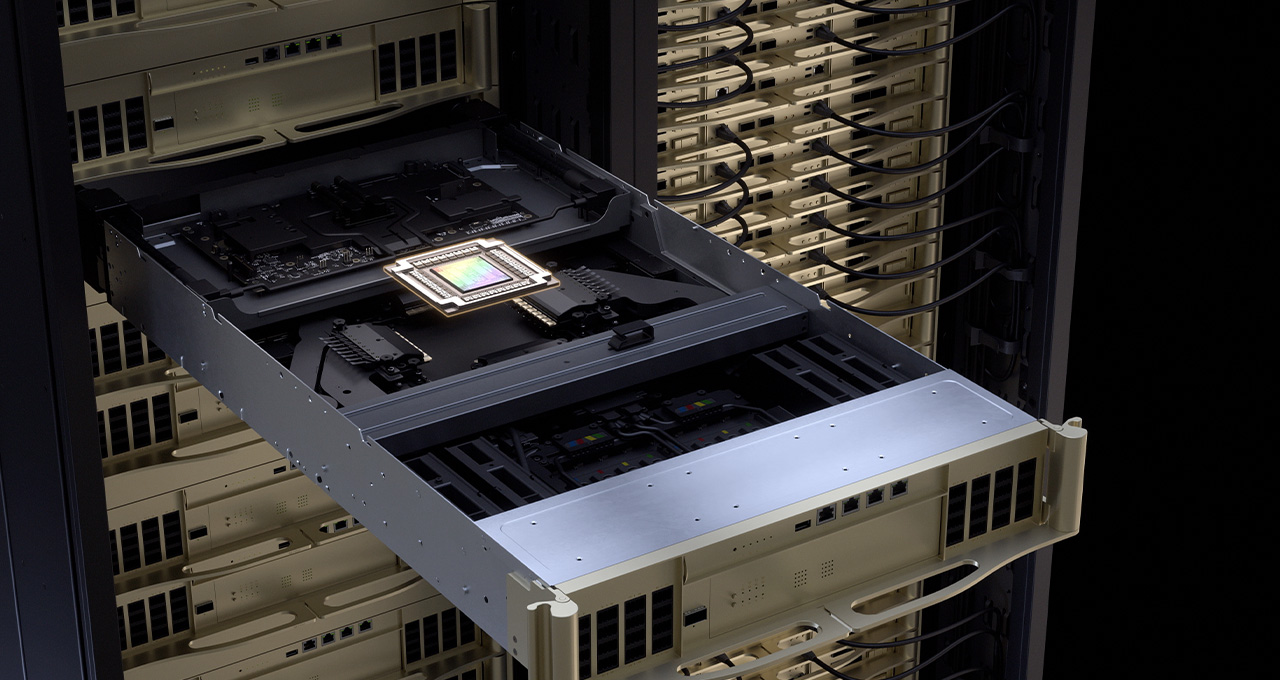
NVIDIA Spectrum-X Ethernet Photonics is now in full production — the new generation of Spectrum-X switching, built on co-packaged optics (CPO), that supports scale-out and scale-across AI factory deployments in the NVIDIA Vera Rubin platform.
The platform reaches production through deep co-engineering with Taiwan’s semiconductor and systems ecosystem — with TSMC, SPIL, TFC and Foxconn each contributing a critical layer of the silicon-to-system pipeline:
- TSMC’s advanced silicon photonics fabrication transforms breakthrough designs into production-ready silicon.
- SPIL’s chip-scale packaging, assembly and testing bring electrical and optical components together with micron-level precision.
- TFC’s laser dies are packaged into laser modules and validated for the reliability demanded by AI workloads that run 24/7.
- Foxconn’s system assembly integrates Spectrum-X Photonics switches into complete, rack-ready networking platforms.
- NVIDIA AI factory systems are unpacked, installed and powered on inside an NVIDIA-owned and -operated AI factory, validating the full pipeline before customer shipment.
Spectrum-X Ethernet Photonics is one of the most extreme examples of NVIDIA full-stack codesign. Compared with networks using traditional transceivers, Spectrum-X Ethernet Photonics delivers 5x better power efficiency, 5x longer AI uptime and 1.3x faster time to deploy.
By simplifying design and freeing more power for compute, NVIDIA co-packaged optics networking provides the foundational fabric for million-GPU AI factories, with CoreWeave, Lambda and Oracle Cloud Infrastructure among the first to adopt it.
Go behind the scenes with Lambda as they unbox and deploy NVIDIA Photonics CPO switches in their AI factory. Read the Lambda blog and watch their unboxing and collaboration video.
By enabling CPO real at scale, NVIDIA is eliminating the power, resiliency and deploy-time ceiling of optical interconnects that has constrained AI cluster growth.
Learn more about NVIDIA silicon photonics.
Monday, June 1, 5:00 p.m. PT 🔗
Sovereign AI Leaders Harness NVIDIA Nemotron to Advance Region-Specific Applications

New additions to the NVIDIA Nemotron open model family are advancing sovereign AI development by giving developers open, efficient models, datasets and NVIDIA NeMo libraries to adapt their models so they reflect local language, culture, regulations, data, infrastructure and economic goals.
To extend sovereign AI data infrastructure across Southeast Asia and Latin America, NVIDIA today announced the Nemotron-Personas-Vietnam dataset, developed with FPT, and the Nemotron-Personas-El-Salvador dataset, developed with WideLabs — both releasing this week.
Built with regional partners, Nemotron-Personas is extending Nemotron with population-scale synthetic datasets grounded in real-world demographic and labor statistics — structured, auditable datasets designed to reflect the diversity of communities, languages and economies.
NVIDIA is also releasing agent skills and playbooks for NVIDIA NeMo open libraries — from data curation and fine-tuning to post-training and deployment — making it easier for developers to build sovereign AI models customized for various domains and regional languages.
In addition to FPT and WideLabs, AI leaders across the world are using Nemotron models, datasets, training recipes and NeMo libraries running on NVIDIA Cloud Partners (NCPs) to build sovereign AI tailored to local languages, industries and deployments:
- Visionbay.ai is building FoxBrain 2.0, a manufacturing foundation model for factory agents with a post-trained version of Nemotron 3 Nano Omni model on Visionbay.ai.
- NAVER Cloud received Nemotron 3 Ultra early access and is training HyperClova-X Next using the model architecture and Nemotron datasets for enterprise services spanning search, maps and internal copilots.
- Viettel AI is fine-tuning Nemotron 3 Super for a population-scale legal application in Vietnam, enabling Viettel to become an AI and telecommunications service provider.
- Sarvam is building multilingual, population-scale, voice AI agents for serving 1.4 billion people in India across public sector and financial services use cases.
- Gnani.ai is building frontier large language models (LLMs) and speech intelligence models based on NVIDIA Nemotron 3 Nano models and the Nemotron Speech architecture to power production-grade, sovereign-first voice AI.
- Rafiqspace.ai and Lintasarta are collaborating to develop Bahasa Indonesia speech intelligence capabilities for government agencies, national institutions and regulated enterprises using Nemotron speech models.
- Fsas Technologies is building on-premises, retrieval-augmented generation solutions for public sector and manufacturing subject-matter experts that need sovereign data handling.
- ABEJA is building an agentic LLM for enterprise workflows, using NVIDIA Nemotron libraries and datasets to support multistep planning, tool use and long-context deep research on Japanese Wikipedia and e-government legal data.
- APMIC is developing sovereign AI models for financial services and government customers using NeMo libraries and Nemotron 3 Nano training recipes.
Sovereign AI is especially important for countries and industries where generic models aren’t enough to meet specific goals, as nations need AI that speaks their language, understands their laws and fits their local context. Building and deploying sovereign AI in-country requires a robust cloud platform equipped for accelerated computing and inference at scale.
NVIDIA Cloud Partners, including Viettel Solutions, YTL AI Cloud, NAVER Cloud, Visionbay.ai and FPT, are AI clouds powered by the NVIDIA accelerated computing platform, providing scalable, secure and reliable regional compute and tools to support growing sovereign AI initiatives and serve millions of customers across Asia.
Learn more about using NVIDIA Nemotron and NeMo to build sovereign AI models.
In addition, see how NVIDIA partners are adapting open models for sovereign AI use cases by attending these sessions at GTC Taipei.
Monday, June 1, 7:35 a.m. PT 🔗
NVIDIA MGX Scales AI Factories With NVIDIA Vera Rubin, 800 VDC and a Growing Global Ecosystem
At GTC Taipei, NVIDIA and more than 80 NVIDIA MGX partners are advancing modular, MGX-ready AI factory infrastructure spanning systems, power and cooling.
AI factories are becoming the engines of agentic AI, where reasoning models, long-context inference and AI-to-AI workflows demand more performance, efficiency and resiliency at production scale.
To help builders meet that demand, NVIDIA is expanding NVIDIA MGX, the open modular reference architecture for AI factories, with the third-generation MGX rack design for the NVIDIA Vera Rubin platform, MGX-compatible 800 volts direct current (VDC) power infrastructure and a global ecosystem.
A Modular Foundation for AI Factories
MGX spans single-node servers, rack-scale systems, POD-scale deployments and full data center infrastructure, giving manufacturers a common foundation for building accelerated systems faster and with less engineering effort.
The architecture supports Arm- and x86-based systems, uses open standards such as PCIe, and is designed to remain compatible across current and future generations of GPUs, CPUs, DPUs and networking technologies. NVIDIA has also contributed the MGX rack-scale design to the Open Compute Project, helping broaden adoption across the data center industry.
Vera Rubin Brings MGX to the Rack-Scale Era
Announced today, NVIDIA Vera Rubin is in production, with MGX delivering five purpose-built rack-scale systems designed for modern agentic AI workloads.
The third-generation MGX rack architecture combines modular, cable-free, hose-free and fanless compute and NVIDIA NVLink switch trays with dynamic power steering, intelligent power smoothing and 100% liquid cooling engineered for 45-degrees-Celsius warm-water inlet temperatures.
Those rack-level advances also align with NVIDIA DSX, the AI factory-scale platform for design, simulation and operations. MGX provides a common physical foundation for scale-up rack domains and disaggregated inference designs, while DSX reference designs, simulation technologies and operations software help builders plan, validate and operate complete AI factories across compute, networking, storage, power, cooling and controls.
800 VDC Creates an Upgrade Path for AI Factory Power
As AI factories scale, operators need more compute performance from the same physical and power footprint.
NVIDIA 800 VDC power architecture helps address that shift by reducing conversion stages, moving direct-current power closer to the rack and supporting higher-density accelerated computing.
For existing and in-progress facilities built around alternating current (AC) distribution, MGX-compatible 800 VDC power racks provide a practical bridge to hybrid AC and 800 VDC designs. That upgrade path helps protect current land, power and shell investments while preparing AI factories for future rack-scale compute capability.
In NVIDIA Vera Rubin NVL72 systems, the Intelligent Power Smoothing feature helps cushion the steep load swings created by large, synchronized AI workloads. This capability addresses a growing challenge in power delivery as AI factories scale. Learn more about the power-stabilization principles behind this work in this paper.
NVIDIA Partners Turn Modular Design Into Deployment
At GTC Taipei at COMPUTEX, the NVIDIA partner ecosystem is visible across the full AI factory stack. From global system manufacturers and platform builders to power density and cooling partners, the ecosystem is building MGX-compatible systems that help customers deploy full-stack AI factory solutions at global scale.
Together, the MGX ecosystem is turning modular design into deployed AI infrastructure, giving customers access to an open architecture, broad supply chain flexibility and the full NVIDIA software stack for the next generation of AI factories.
Monday, June 1, 6:40 a.m. PT
After a GTC Keynote, ‘TFC’ Hits the Spot

What NVIDIA founder and CEO Jensen Huang referred to as “TFC” — Taiwanese Fried Chicken — was on the menu for the crowd of onlookers gathered at a local mom-and-pop restaurant Monday night in Taipei.
Fresh off his GTC Taipei keynote, Huang and more than 80 partners from NVIDIA’s Korea partner ecosystem gathered at the restaurant for a casual evening in advance of Huang’s next stop — Korea — where Huang said he’s excited to meet with more partners and leaders from the companies and organizations helping to build the future of AI with NVIDIA.
After the dinner gathering Huang handed out the delicious Taiwanese chicken and signed black bowls from the restaurant for the growing crowd of fans and media.
Check back here for the latest from NVIDIA GTC Taipei at COMPUTEX and Huang’s travels in Korea.
Sunday, May 31, 8:00 p.m. PT 🔗
Live Updates From the GTC Taipei Keynote
Hear from NVIDIA founder and CEO Jensen Huang live on stage at Taipei Music Center.
‘AI Is Now a Profit Generator. AI Is Now a GDP Generator,’ NVIDIA CEO Jensen Huang Tells GTC Taipei at COMPUTEX
NVIDIA founder and CEO Jensen Huang touched down in Taipei and hasn’t stopped moving.
Night markets with the partners building the world’s AI infrastructure. Dinner with the CEOs whose companies run on NVIDIA’s platform. A new campus unveiled in the region that manufactures the chips powering the AI economy.
Everywhere Huang went this week, the ecosystem was there — and today, they all came together at Taipei Music Center for the keynote. Huang thanked them all, from the CEOs filling the room to the fruit vendor he met at a night market, as a wall of partner logos filled the screen.
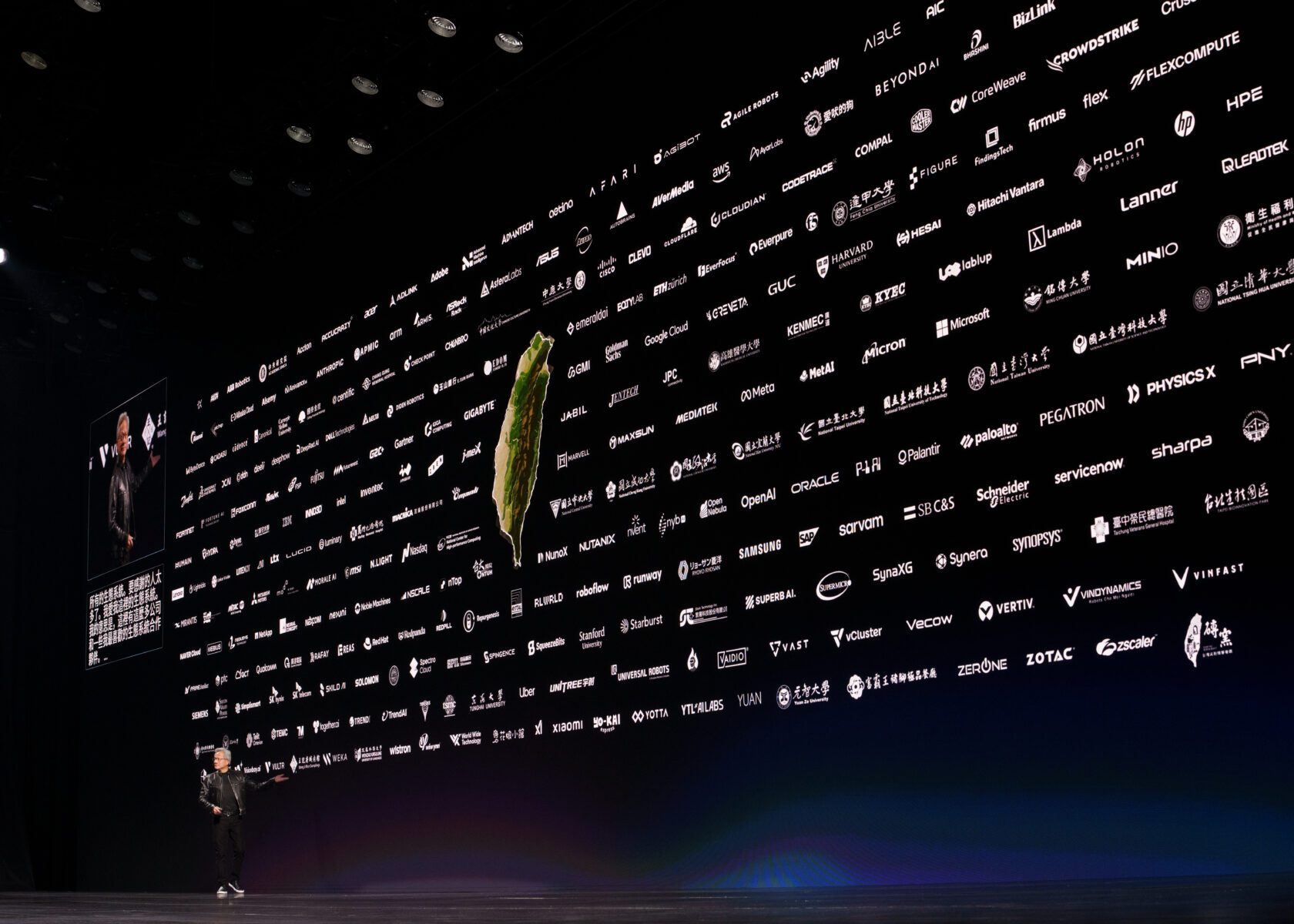
“AI is now a profit generator. AI is now a GDP generator,” Huang told an audience gathered in person and across more than 70 watch parties throughout Taiwan.
For three years, the question was whether AI would be useful. Generative AI answered yes. Reasoning models made it capable. Agents are making it work — autonomously, continuously, at scale.
“Useful AI has arrived,” Huang reported, with platforms like GitHub already seeing developer commits nearly triple in the first few months of 2026.
And that’s made those at the center of that surge more valuable than ever, Huang said.
AI Factories Become the New Infrastructure
Tokens are now profitable units of revenue, Huang said — and AI companies are racing to build more AI factories, driving compute demand in Taiwan to new highs.
“Ultimately, our customers don’t want to buy computers, they want to build AI factories,” he said.
NVIDIA DSX is NVIDIA’s AI factory framework for infrastructure builders: DSX MaxLPS delivers 40% more GPUs within the same power budget, and DSX OS is open source and extensible.
“The world is racing to build AI factories, the largest infrastructure build out in human history … because compute is revenues,” Huang said, ticking through work with partners including CoreWeave, Nebius, Nscale, NAVER Cloud, Yotta, Firmus, Indosat, GMI and more.
“Each one of these companies are serving regional as well as global customers,” Huang said. “Incredible companies, incredible opportunities.”
Huang argued that in the age of AI factories, compute is revenue — every token produced is profitable — making performance per watt, reliability and the long lifetime of these systems the core financial levers, not just technical specs: “If you have 1 gigawatt of power, then throughput per watt is revenue … Choosing the wrong architecture just because the chips are cheaper doesn’t make sense — compute is revenue.”
“The more you buy, the more you make,” Huang said.
NVIDIA Vera Rubin in Full Production
Huang then announced NVIDIA Vera Rubin is ramping into full production.
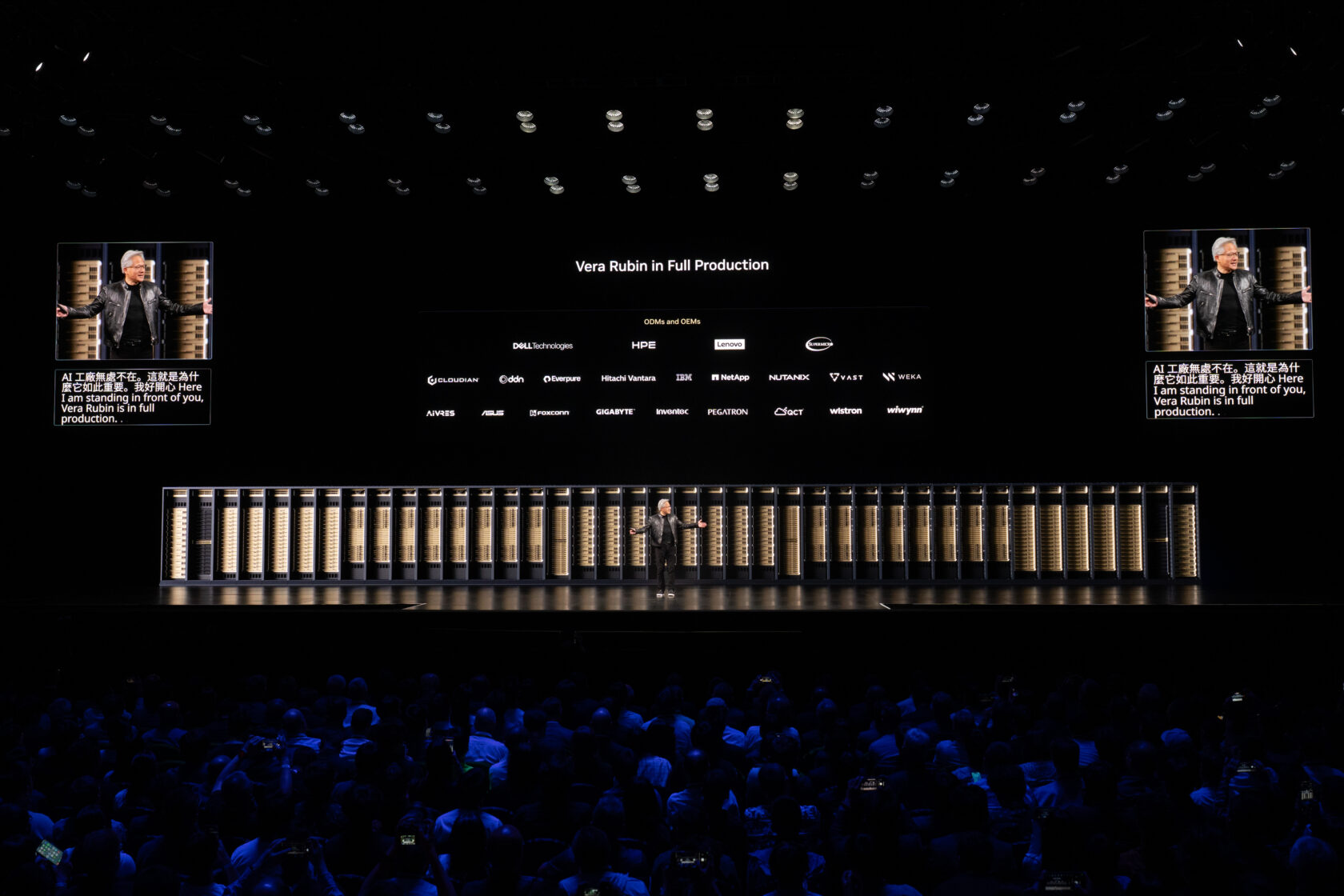
“The supply chain we created for Vera Rubin is twice as large as Grace Blackwell,” he said. “We need it all to support the demand.”
The five-rack platform — NVIDIA Vera Rubin NVL72 systems, NVIDIA Vera CPU, NVIDIA Groq 3 LPX, NVIDIA Spectrum‑6 SPX Ethernet racks and NVIDIA Vera BlueField‑4 STX storage — is being ramped by hundreds of NVIDIA supply chain ecosystem partners — 150 in Taiwan alone — across 350+ factories and 30 countries.
“NVIDIA’s ecosystem spans all the way upstream to our supply chain here in Taiwan, where it all begins, and downstream all the way to data centers and eventually to end users,” Huang said, calling Taiwan “the richest ecosystem, the world’s best supply chain ecosystem.”
The ramp now spans AI clouds, on‑premises data centers, and industrial and enterprise deployments.
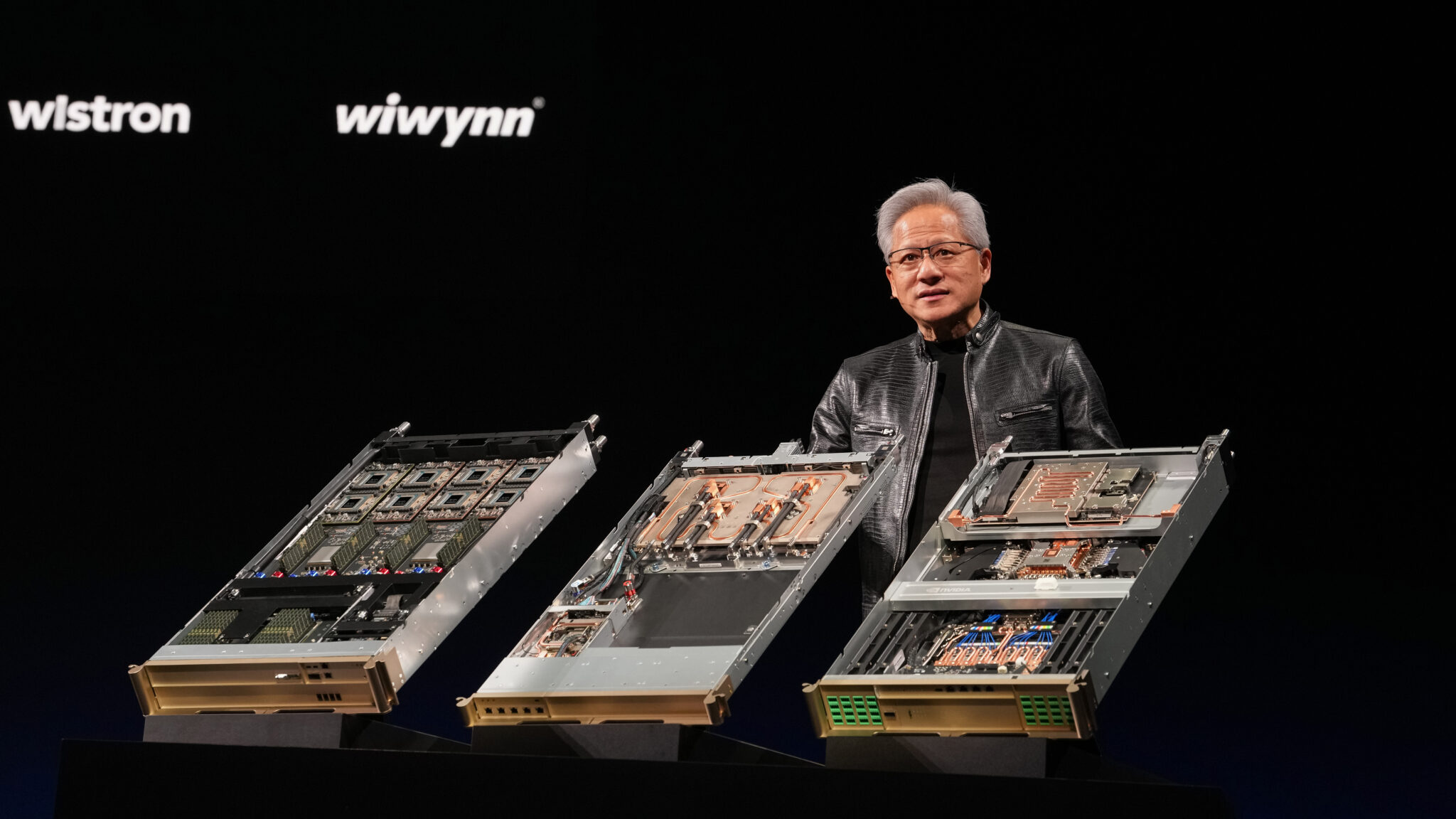
On stage, Huang walked past a full stack of next‑generation systems — Vera Rubin NVL72 systems, a liquid‑cooled Vera CPU rack, Vera BlueField‑4 STX storage and security systems, Grok 3 LPX low‑latency inference trays and Spectrum‑X Ethernet Photonics networking — underscoring how NVIDIA’s latest hardware is designed as a single, tightly integrated AI factory platform.
Spectrum-X Ethernet Photonics — the world’s first 200Gb/s SerDes Ethernet switch with co-packaged optics, built for million-GPU AI factories, is now in production, with CoreWeave, Lambda and Oracle Cloud Infrastructure among the first ecosystem partners and adopters.
NVIDIA Vera CPU — a CPU built for the age of AI — delivers 88 cores, 1.2TB/s of LPDDR5X bandwidth and a 3.6TB/s on‑chip fabric with no chiplet boundaries, plus 10 instructions per clock for world‑class single‑thread performance.
“We created CPUs for humans in the past … There will be billions of agents, and these agents are going to be using the CPUs with very little patience,” Huang said, explaining why Vera is designed as “a CPU for agents.”
NVIDIA Vera BlueField-4 STX handles security at the silicon level. NVIDIA DOCA Argus cuts threat detection from minutes to milliseconds; DOCA Vault secures AI data at rack scale.
Agents Get Their Runtime
Huang cast agents as the next great computing opportunity.
That shift, he argued, creates a new CPU market that “never existed before,” driven by autonomous agents running continuously, orchestrating tools and data.
This “application pattern, the computing pattern of the next decade,” Huang said, is something every company will run, with agents becoming a foundational layer of their infrastructure.
NVIDIA is aiming to capture that opportunity with the NVIDIA Agent Toolkit — a full‑stack runtime for building, deploying and securing autonomous agents across the enterprise.
The toolkit combines large language models, an agent harness and an enterprise‑grade runtime so companies can “run agents safely” and “build agents for our own workloads” on top of the NVIDIA AI platform.
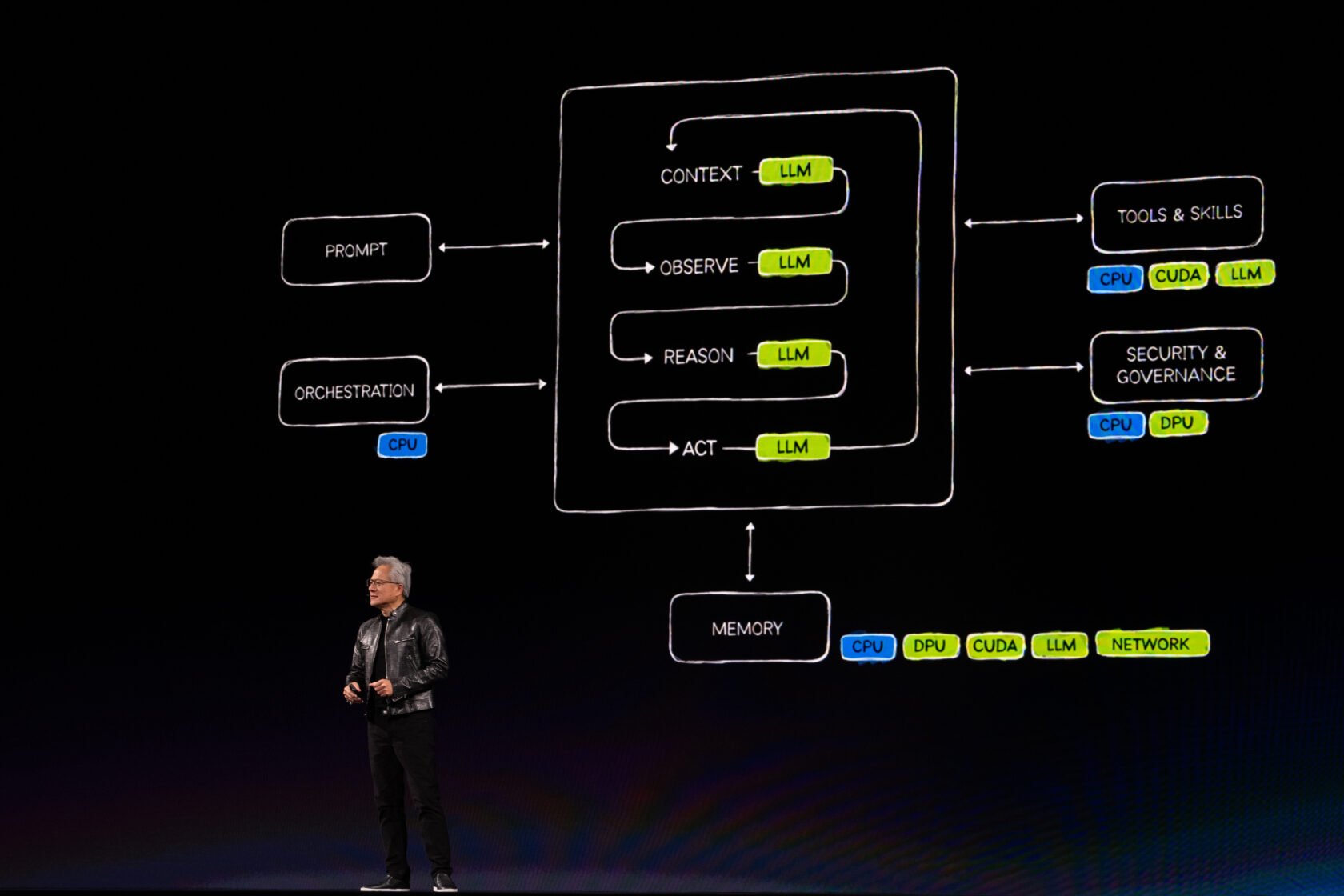
Huang pointed to chip design as one of his favorite use cases for agents, highlighting NVIDIA’s work with Cadence on a chip‑design “super agent.”
By orchestrating register-transfer-level generation, testbench creation, regression testing and debug, the Cadence-NVIDIA verification agent runs hundreds of simulations and formal checks automatically.
“What once took weeks now takes hours,” Huang said, with verification cycles now “over 40 times faster.”
Huang announced Nemotron 3 Ultra, NVIDIA’s new 550‑billion‑parameter mixture‑of‑experts model — a smaller, smarter frontier‑intelligence model that delivers up to 5x faster inference and is about 30% cheaper to run than today’s leading open models.
“We’re dedicated to building open models for the world, so you can take all of it, add to it, make it even better, make it yours,” Huang said.
Agent skills tapping NVIDIA CUDA‑X libraries — including cuDF, cuOpt, AI‑Q, NeMo, PhysicsNeMo and CUDA‑Q — are now accessible to agents everywhere. These verified NVIDIA agent skills are available in the Claude Code plug‑in marketplace, as well as the Hermes Skills Hub, so agents can call high‑performance CUDA‑accelerated capabilities as tools.
NVIDIA OpenShell is the secure runtime for these autonomous agents. It provides individual sandboxes for agent operations, centralized policy enforcement and a governance management gateway, and runs on major enterprise platforms including Ubuntu, Windows and Red Hat OpenShift.
And this isn’t just cloud infrastructure. The agent runtime is landing on enterprise servers, workstations and laptops.
Computers, Reinvented
Forty years of personal computing led here. NVIDIA and Microsoft are reinventing the PC for the age of personal agents — from the data center to the desk.
Huang traced the arc from the original Windows PC ecosystem to today’s agentic era, arguing that the same kind of platform shift is now happening for AI.
The new PC, he explained, layers large language models and an agent runtime on top of the traditional operating system, so users can talk to an autonomous assistant that can see, understand and act on their behalf across files, apps and the web.
Huang announced NVIDIA RTX Spark, which brings 1 petaflop of AI performance to slim Windows laptops and compact desktops.
Built with MediaTek and running Microsoft Windows, it powers the first PCs purpose‑built for personal agents — always on, always local.
Huang described RTX Spark as “everything we’ve learned over 33 years distilled into one chip,” pairing an NVIDIA Blackwell RTX GPU with 6,144 CUDA cores and 1 petaflop of AI performance with a custom 20‑core Grace CPU “built in partnership with MediaTek, fused by NVLink.”
He held up the new chip, calling it “the most amazing chip the world has ever built,” and emphasized that “100% of NVIDIA’s software stack runs here” — from digital biology to seismic processing — to power a new generation of Windows PCs designed for personal agents.
Adobe is rearchitecting Photoshop and Premiere from the ground up for RTX Spark, delivering 2x faster AI and graphics performance.
Huang explained that Adobe has “re‑engineered the architecture, the core of Adobe Photoshop and Premiere” for RTX Spark and will release these versions “twice as fast,” adding that they’re also designed to be agent‑friendly.
“This is the first across‑the‑lineup PC reinvention in forty years,” he said.
Huang then unveiled a new lineup of Windows machines built for agents — laptop, desktop and deskside supercomputer — and walked the audience through how they fit together.
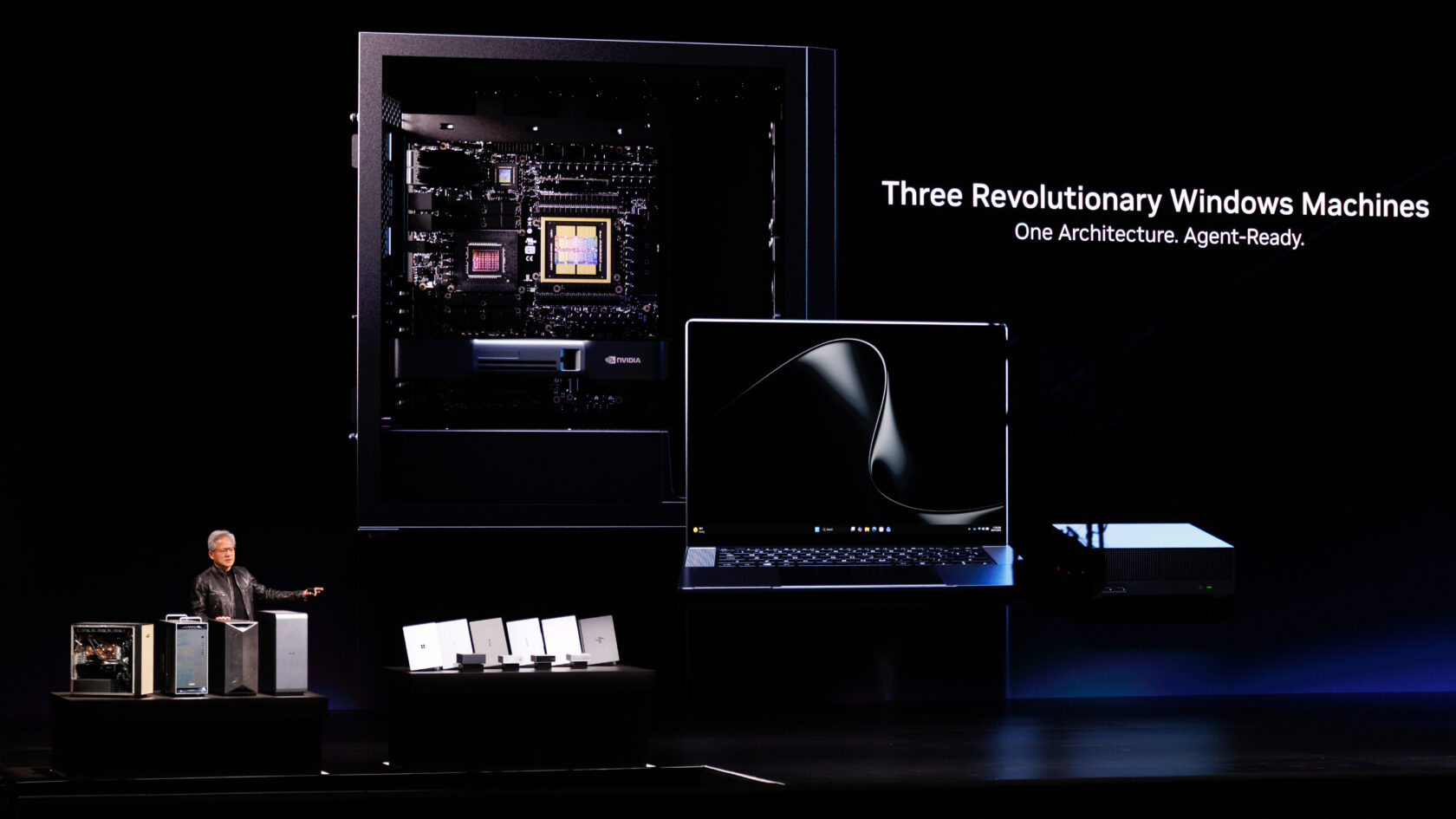
First came RTX Spark-powered laptops designed, as he put it, “for creating, for gaming, for agents” with personal AI running locally.
Then he moved to the desktop “personal agent” box, a compact Windows machine meant to sit at home and run continuously. “This agent could run 24/7, meter free,” Huang said. “You could download your agent. You could raise your lobster in here. This is your claw, it’s running all the time, no meter anxiety, and it’s yours ”
It’s designed as an always‑on personal AI hub that gets smarter over time as models like Nemotron 3 Ultra — and future generations — roll out.
Finally, he introduced NVIDIA DGX Station for Windows — a deskside AI supercomputer with tens of petaflops of AI performance and hundreds of gigabytes of memory for developers who want an entire AI factory’s worth of compute next to their desk.
Over time, Huang said, “there’s actually an AI supercomputer in your house … these in time become a lot more like R2‑D2 to you, more like C‑3PO to you, than it feels like a PC to you.”
Together, he argued, these systems mark a shift as significant as the reinvention of the phone into the smartphone.
“This is the beginning of that journey … a new line, a new beginning,” Huang said, noting that every generation of NVIDIA architecture will include a desktop, laptop and workstation, and that “100% of the world’s PC industry has joined us to reinvent the PC.”
AI Enters the Physical World
AI is moving into factories, vehicles, hospitals and the physical systems that run the world. Huang described this as the frontier of physical AI — where agents don’t just read and write text, but perceive, reason and act in the real world.
The NVIDIA Cosmos 3 omnimodel — a world foundation model built on a mixture‑of‑transformers architecture — is designed to understand and simulate the physical world from any perspective, first‑ or third‑person.
Huang explained that while language models are trained on text written from a human point of view, robots need data from their own perspective, making physical AI “one of the hardest data problems” in computing.
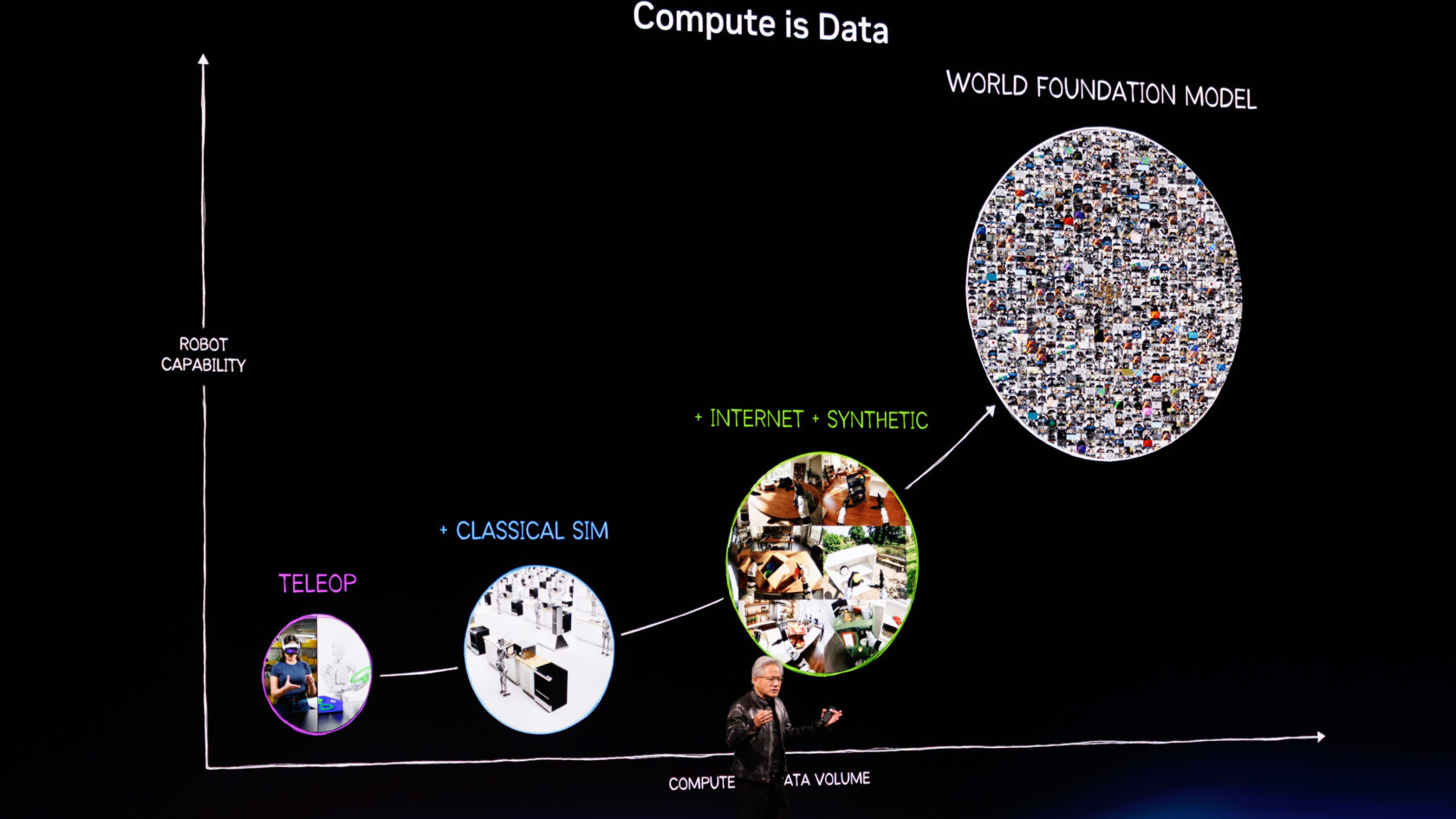
Cosmos 3 tackles that by learning from teleoperation, simulation and re‑projected third‑person video, and arrives at the frontier across benchmarks in vision reasoning, world simulation and action generation.
Cosmos 3 ships with an extensive open source toolkit that streamlines the full pipeline — from data generation and simulation to training and validation — so developers can build robots and autonomous systems that can, as Huang put it, “understand and reason about the physical world, generate it, simulate it in the loop and even be the policy itself.”
Huang described how NVIDIA DRIVE Hyperion — with NVIDIA Halos OS — is becoming a global platform for autonomous vehicles (AVs), with major automakers and mobility services adopting the stack across regions. He said DRIVE Hyperion‑equipped vehicles would connect into mobility services that already represent “approximately 97% of the world’s mobility services,” positioning NVIDIA’s AV platform as a common foundation for robotaxis and intelligent fleets worldwide.
NVIDIA introduced Alpamayo 2 Super, an open AV reasoning model built to understand complex driving scenes and support end‑to‑end decision‑making.
Alpamayo 2 is paired with AlpaGym, a closed‑loop reinforcement learning framework for AV policy training, and OmniDreams, which can generate photorealistic driving scenarios, enabling developers to train and validate self‑driving systems in simulation before they ever hit the road.
For robotics research, the NVIDIA Isaac GR00T Reference Humanoid Robot is the first open humanoid robot reference design built on NVIDIA Jetson Thor and the NVIDIA Isaac GR00T open development platform.
The Full Stack Is Shipping
Huang ended by declaring that “the computer industry has been completely changed in the last six months,” Huang said. He described a single agentic computing pattern that will “repeat over and over and over again”: an agent that is a model, wrapped in a harness that uses tools with skills and runs in a runtime.
That runtime might live in the cloud, on premises, on a PC or in a robot, but “the computing pattern is exactly the same for all of them.” Companies will “use different harnesses” and “different models,” improve them for proprietary use and even “create sub‑super agents” they can rent to others, all built on the NVIDIA Agent Toolkit — “a wonderful way for all of you to engage AIs.”
In that world, he said, Vera Rubin is already “in full production,” not just a GPU but “an entire disaggregated, distributed agent processing system,” built to run agents where Grace Blackwell was built to process AI, particularly inference.
NVIDIA, he said, has “really become an infrastructure company, not just a GPU company, not just a systems company, but an infrastructure company to help you generate the maximum revenues, the maximum profit, and to get there as soon as possible.”
At the same time, CPUs themselves are changing. “The agent world, this new way of doing computing, where you build CPUs now for agents, not for people,” he said.
And with NVIDIA and Microsoft creating “a whole new line of PCs” for agents — “this is a new beginning” — the same agentic processing pattern will “run on all kinds of devices” from PCs to robots, satellites, base stations and factories — in the cloud, on premises, at the edge.
“This agentic computing pattern will be replicated in computers all over,” Huang said. “How we think about the personal computer will very likely change.”
He closed by turning back to the people who build it all. “I want to thank all of you for your partnership, your friendship. We couldn’t be here without everything that we do together,” Huang told the audience.
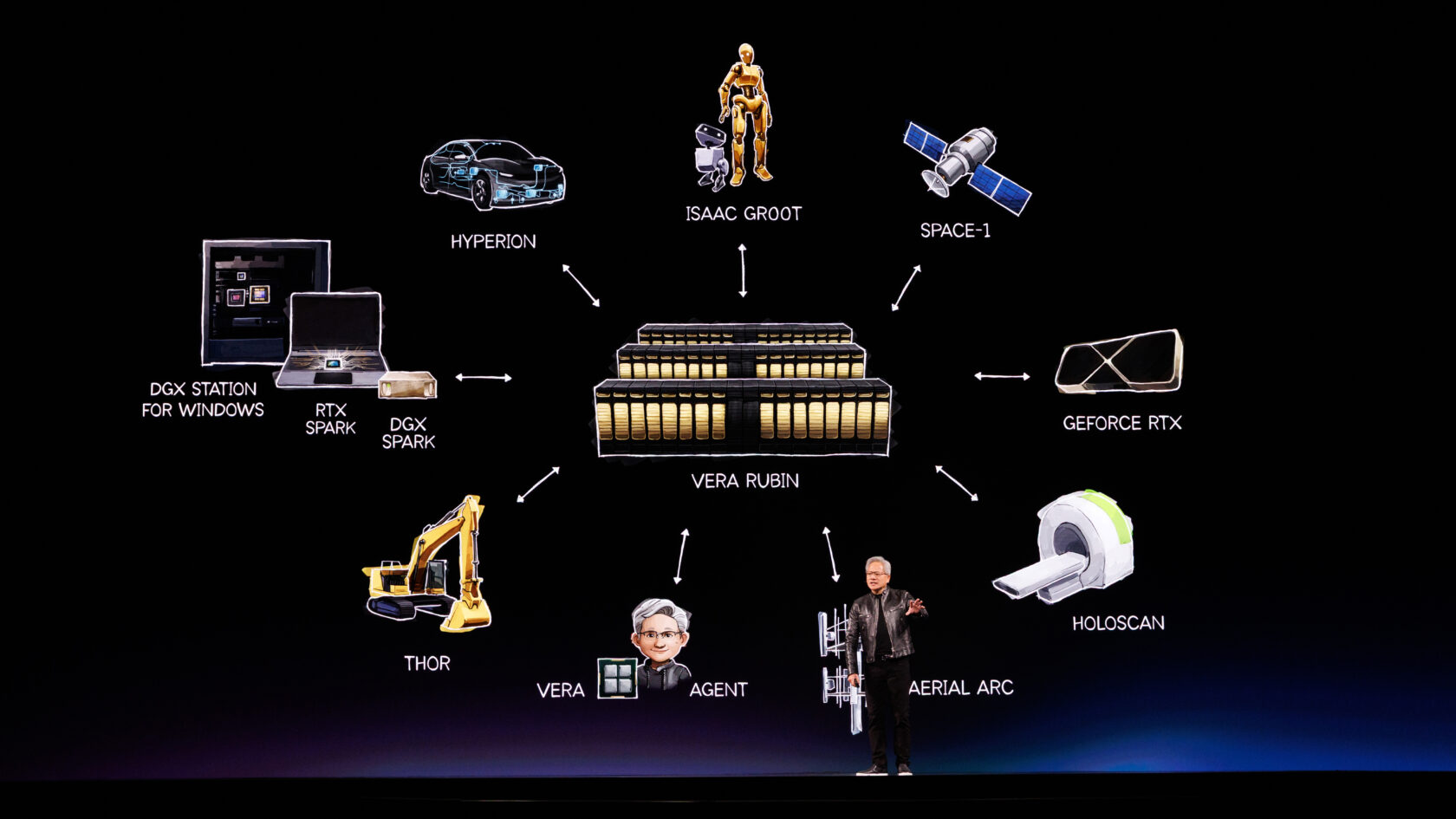
As the keynote ended, Huang queued up an animated recap: an AI robot gets a text — “party at the night market” — and sets off into Taipei’s night markets, a swarm of robots wandering the streets as the story of useful, agentic AI Huang had just laid out spills out from the data center into the city that builds it.
Find all NVIDIA GTC Taipei at COMPUTEX announcements in the online press kit.
Sunday, May 31, 10 p.m. PT 🔗
NVIDIA DGX Spark Gets 2x Accelerations for Local AI Agents and Simplified Setup With NVIDIA NemoClaw
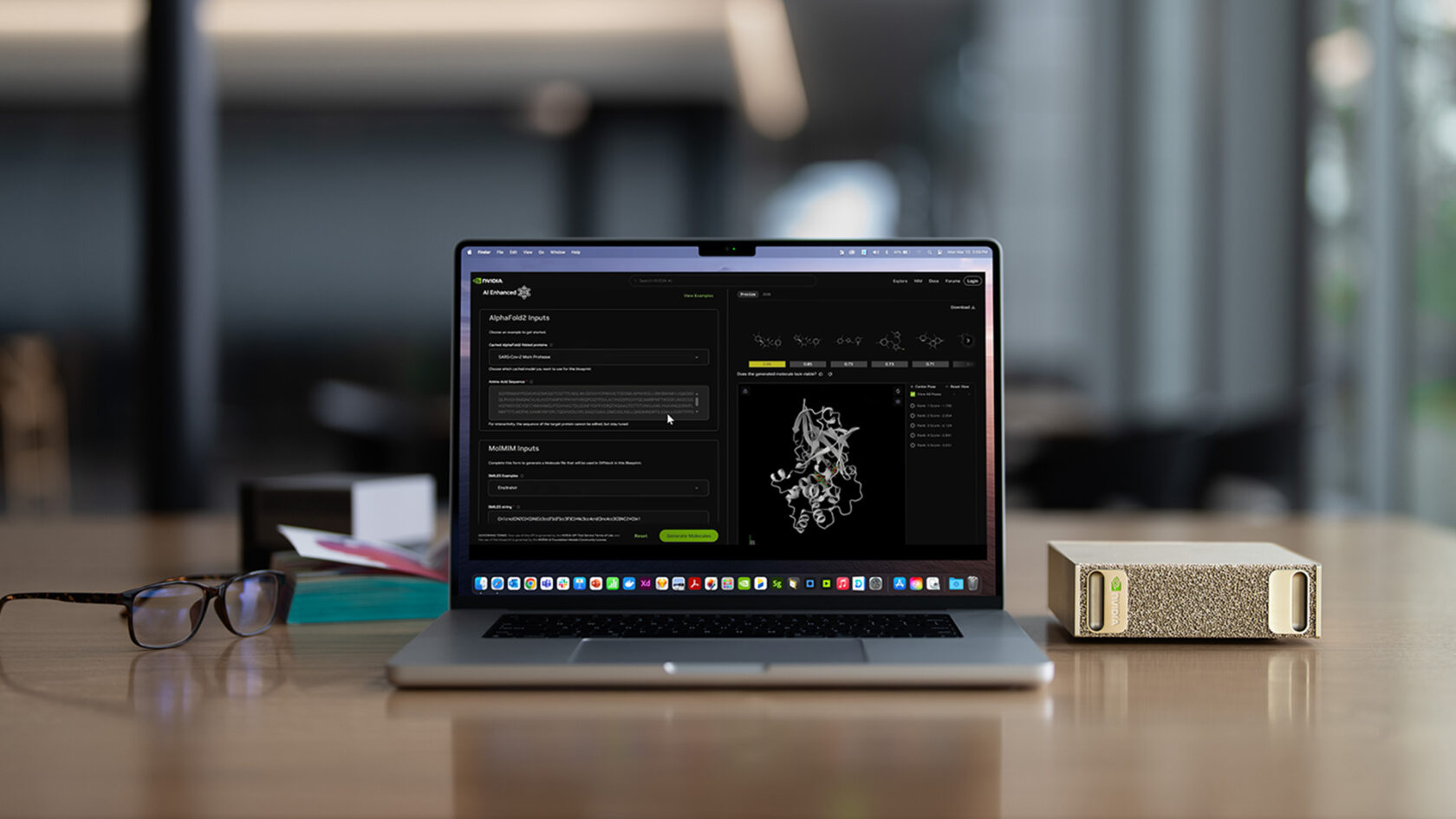
To meet growing demand and accelerate agent development, NVIDIA is making it easier than ever to get started with agentic AI on the NVIDIA DGX Spark personal AI supercomputer — making it the go-to platform for on-device autonomous agents.
A new update — announced at GTC Taipei at COMPUTEX — now makes it simpler to get started with agentic workflows. Users can set up the NVIDIA NemoClaw blueprint with a streamlined installer to securely run agents on their systems. The installation also sets up the latest state-of-the-art open models for users’ hardware, to power those agents efficiently and accurately. Now, the same NemoClaw installer also adds support for Hermes Agent alongside OpenClaw.
NVIDIA is also tuning the inference stack behind DGX Spark to make top agentic models faster and more efficient locally. Developers can experience up to 2.6x faster inference on top agentic models like Qwen3.6 35B on vLLM, driven by a combination of kernel optimizations, NVFP4 quantization and multi-token prediction.
For workloads that need more scale, the NVIDIA Sync desktop app now includes a Cluster Assistant that guides users through connecting two to four DGX Spark systems into a multinode cluster — automatically configuring CX7 high-bandwidth networking, validating user accounts and setting up node-to-node SSH. Once configured, clusters can run larger models and scale inference and fine-tuning workloads across nodes using NCCL and MPI.
Bringing these advancements together, the latest DGX Spark playbooks help developers go from setup to agentic workflows faster with guides for NemoClaw. These include the latest NemoClaw Setup and Example NemoClaw Agents.
Since the arrival of OpenClaw, Hermes Agent and NVIDIA NemoClaw, demand for DGX Spark has continued to grow.
NVIDIA is working across the agentic AI ecosystem to make local autonomous agents more accessible. This includes collaborating with open model providers to advance tool-ready models; optimizing widely used inference frameworks like llama.cpp, vLLM and Ollama; and working with manufacturing partners — Acer, ASUS, Dell, Gigabyte, HPI, Lenovo and MSI — to expand access to NVIDIA Blackwell-based systems.
Together, these efforts help optimize the full stack — from models and frameworks to hardware and workflows — so developers can build agentic applications faster on DGX Spark and NVIDIA GB10-powered systems from system manufacturers partners.
Developers can explore DGX Spark, access resources and get started building autonomous agents locally today by visiting NVIDIA.com and joining hands-on sessions.
Sunday, May 31, 10 p.m. PT 🔗
All Stations Go: Developers Around the World Power Up NVIDIA DGX Station
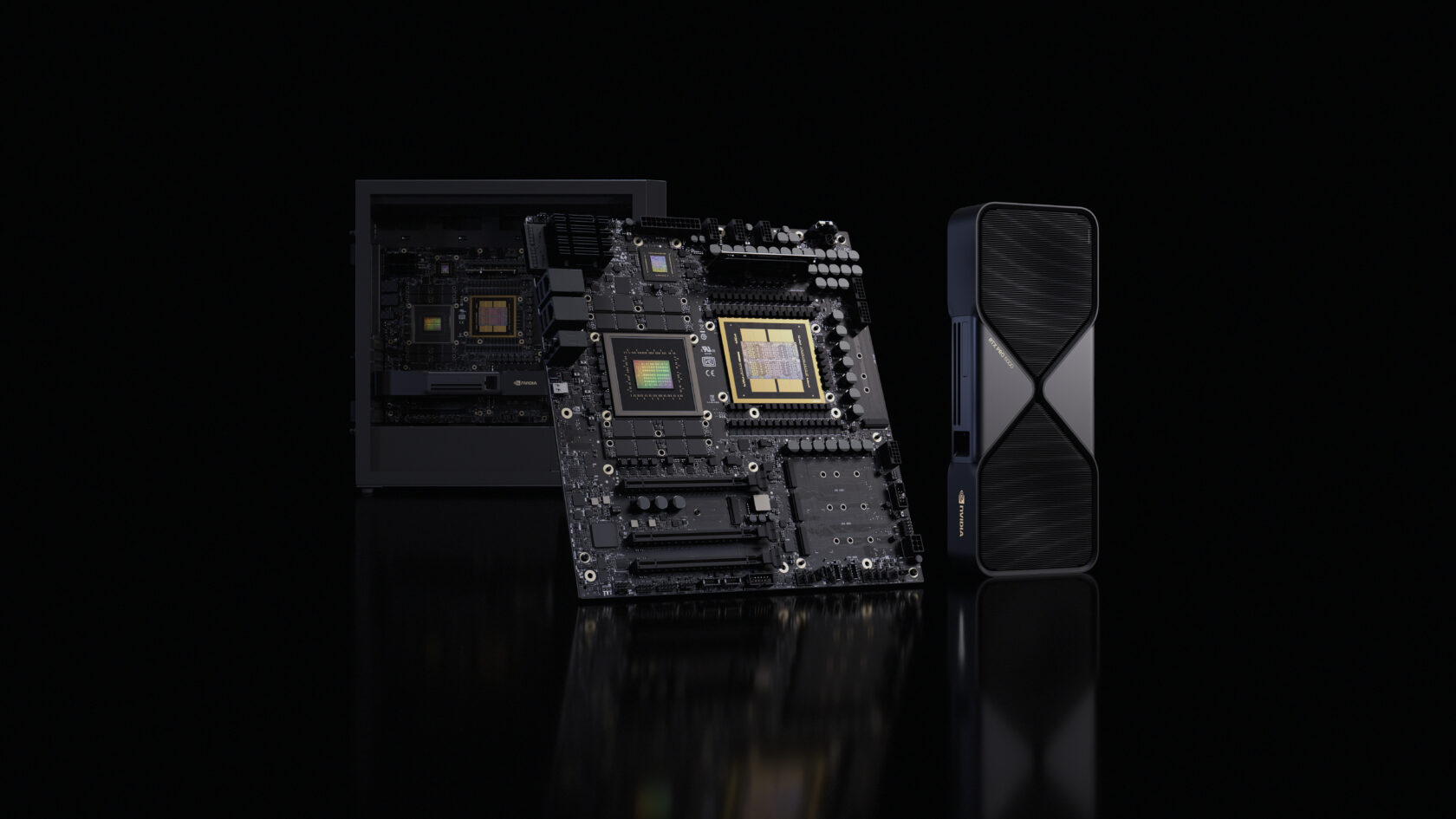
NVIDIA DGX Station deskside supercomputers powered by the NVIDIA GB300 Grace Blackwell Ultra Desktop Superchip have arrived — with systems from ASUS, GIGABYTE, MSI and Supermicro on display on the COMPUTEX show floor.
Researchers and builders are using the systems to push the frontier of AI. Featuring 748GB of coherent memory and up to 20 petaflops of FP4 AI performance, DGX Station lets AI teams iterate on frontier-scale models up to 1 trillion parameters, run multimodal workflows and deploy autonomous, long-running agents at the deskside.
Andrej Karpathy — whose work on neural networks and language models has shaped how a generation of practitioners thinks about AI — is among the first scientists to receive a system.
Matt Berman, one of today’s most technically rigorous AI content creators, has already received his system through a Dell Technologies partnership and is developing with it.
DGX Station provides the foundation for developing and running powerful, always-on autonomous agents locally. The NVIDIA OpenShell runtime provides security and privacy controls to develop, deploy and govern AI systems. Featuring individual agent sandboxes, a policy enforcement engine and a policy management gateway, OpenShell provides a secure environment where agents can run for hours or days to accomplish complex tasks.
Deskside Supercomputing for Every Industry
Across industries, the systems are making an impact.
In healthcare, DGX Station with the NVIDIA BioNeMo platform demonstrates real-time drug discovery and biomolecular AI workflows: protein generation, structure prediction and molecular design pipelines running locally on a single system.
In sports, SūmerSports tested its AI-powered football chatbot SūmerBrain on NVIDIA DGX Station and cut mean response time by about 1.6x compared with using the NVIDIA GH200 Grace Hopper Superchip — with complex query latency dropping nearly 2x.
In energy, EPRI concluded an extensive evaluation on GB300 configurations, covering AI weather prediction and downscaling use cases that support electric power grid operations.
In architecture, engineering and construction, Jacobs deployed DGX Station to run full deep learning experiments spanning multimodal fusion training and vision language model inference, with DGX Spark handling development and validation across the pipeline.
In manufacturing, Keysight is using DGX Station to power Eggplant, its automated software testing tool, enabling the benchmarking of large language models. DGX Station helped Keysight evaluate model performance at scale and better understand the capabilities of the most powerful open source LLMs.
And in automotive, NVIDIA Alpamayo open models with DGX Station brings NVIDIA’s autonomous vehicle research stack to the desktop, with a closed-loop driving scenario inside a virtual environment generated by NVIDIA Cosmos world foundation models.
New step-by-step playbooks are now available to help users get started with DGX Station, including:
- Image and Video Generation With ComfyUI to accelerate content creation.
- Example NemoClaw Agents for building local AI agents with NemoClaw.
- “Bring Your DGX Station to NVIDIA Brev” for seamlessly extending local workloads to the cloud.
- DGX Station Skill for AI Agents to teach an AI agent everything it needs to develop on DGX Station hardware.
- Inference and fine–tune GR00T to accelerate humanoid robot training and development.
In addition, NVIDIA is now bringing DGX Station to Windows. NVIDIA DGX Station for Windows is the world’s most powerful deskside AI supercomputer designed to build, run and connect always-on AI agents to Windows applications and workflows, capable of running frontier AI models of up to 1 trillion parameters locally.
ASUS, Dell Technologies, GIGABYTE, HP, MSI and Supermicro are building systems based on NVIDIA DGX Station with GB300, with partner shipments starting this month.
Sunday, May 31, 6:00 p.m. PT
Now Live: Keynote Pregame Show
It’s almost time for the GTC Taipei keynote by NVIDIA founder and CEO Jensen Huang. Tune in now to the pregame show for an in-depth look at how Taiwan’s technology ecosystem is defining the intelligence era, from AI factories and advanced packaging to embedded computing, agentic AI and physical robotics.
Friday, May 29, 2:30 a.m. PT
What it Takes to Reinvent the Computer Industry
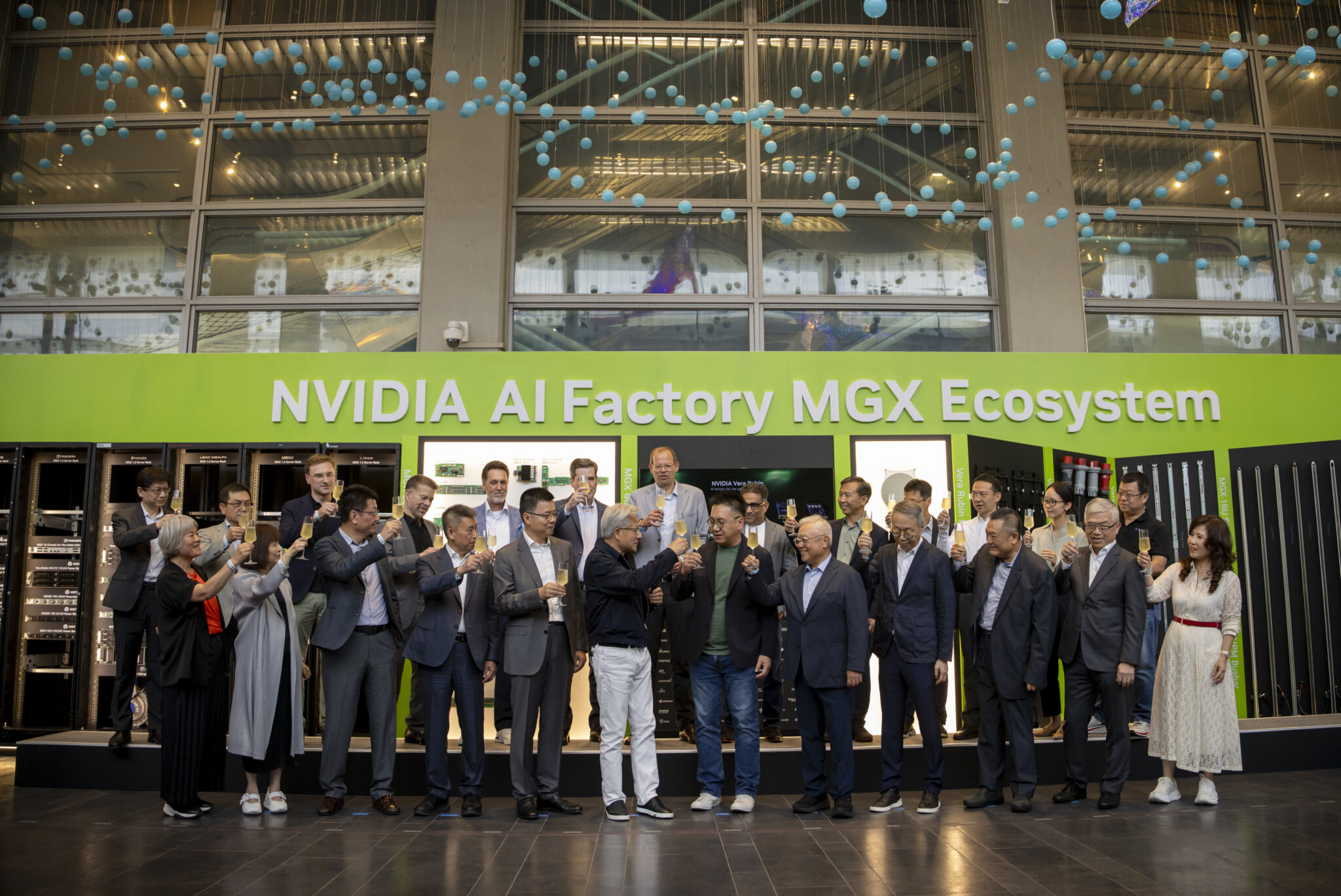
NVIDIA founder and CEO Jensen Huang gathered with MGX ecosystem partners to celebrate the companies helping build the AI factories that drive innovation across industries.
“We’ve been working with all of our partners for quite some time to prepare for this new world where artificial intelligence will be everywhere, rather than just a computer,” Huang said. “Now AI has transformed the computer industry into infrastructure. Every company will be powered by artificial intelligence. Every country will have artificial intelligence that supports its society, its industry and its companies.
And when it comes to what all the partners make possible Huang made it clear – NVIDIA can’t realize its dreams without them.
“I want to thank all of you for your partnership,” Huang said. “I can’t do this without you, and together we are reinventing the computer industry – and we are reinventing the world.”
Thursday, May 28, 6 a.m. PT
Some of the Deepest Partnerships in AI

Chemistry was the word to describe the unique gathering at the Brick Kiln restaurant in Taipei where NVIDIA founder and CEO Jensen Huang hosted more than 30 CEOs.
Standing on a stool, Huang greeted his longtime partners with a toast and thanks for all the collaboration and hard work. Those present for the dinner lead the Taiwan supply chain companies that have helped to transform the tech industry and literally accelerate computing and AI.
Huang moved from table to table chatting with his fellow CEOs and leaders. It was a casual evening filled with laughter and the deep relationships really showed.
The night closed with Huang passing out treats to press and all the people, including families and children, who had filled the street outside the restaurant to see the fun.

Wednesday, May 27, 10 a.m. PT
NVIDIA and Quanta Computer — Ramping the Infrastructure of AI
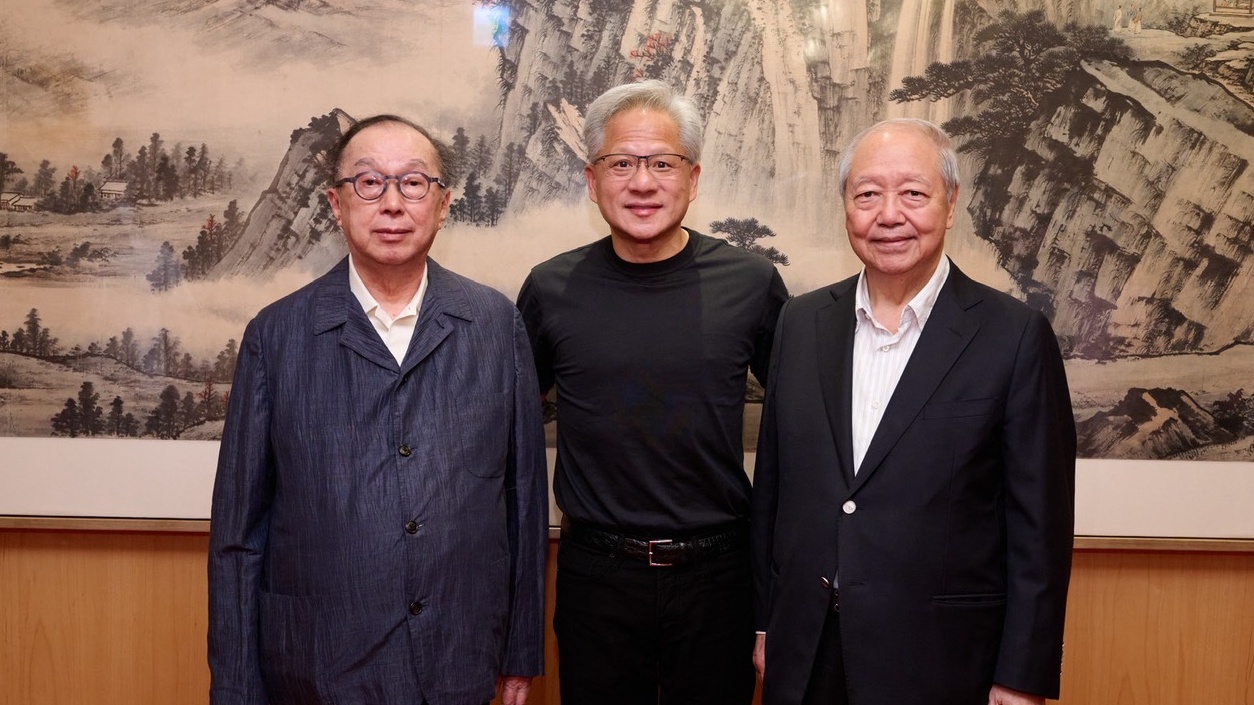
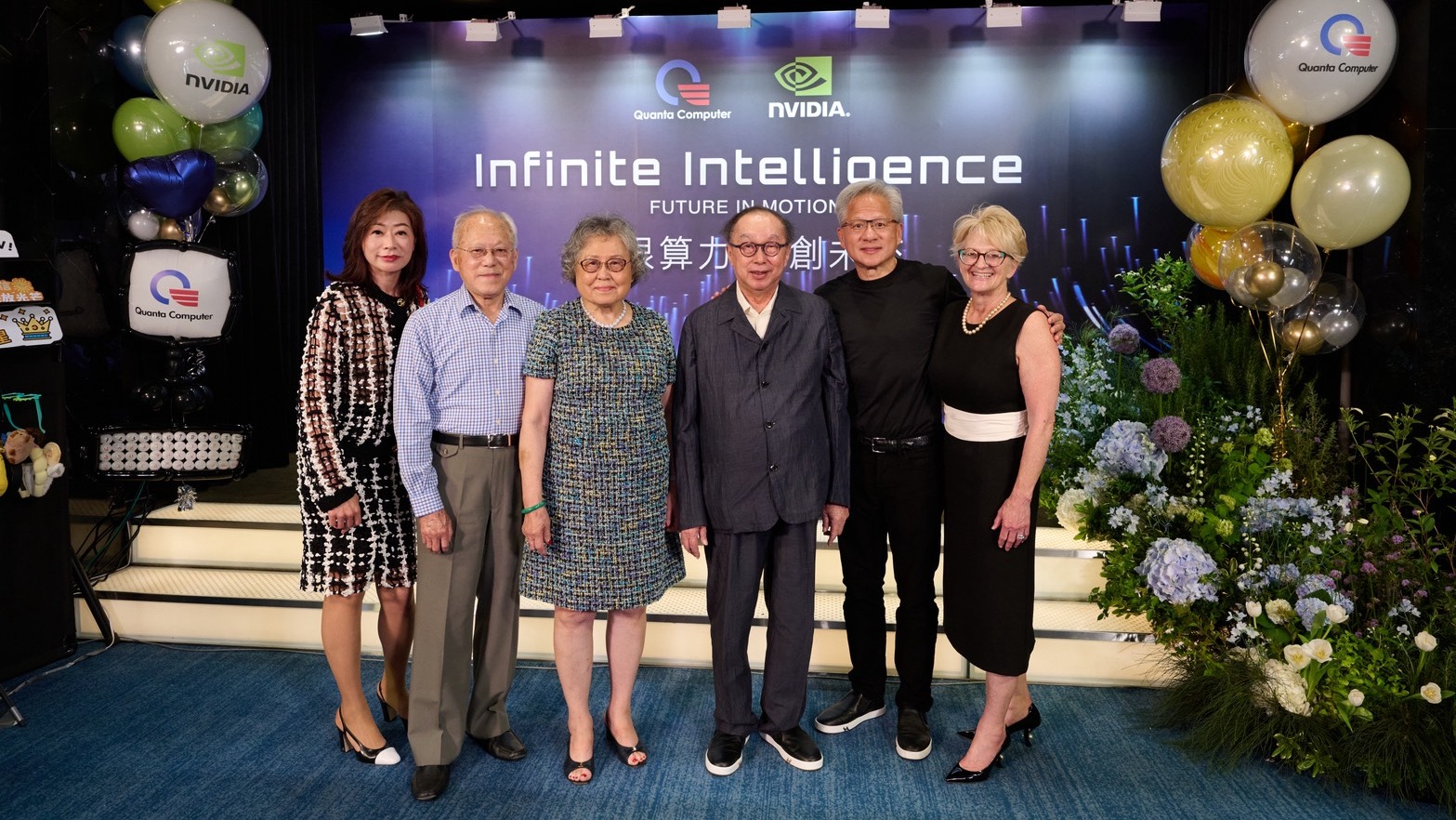
Wednesday evening in Taipei, Huang and his family dined with the Quanta Computer team, including founder and chairman Barry Lam and vice chairman and president C.C. Leung — celebrating years of partnership manufacturing the infrastructure of AI.
Prompted by a question from the assembled press, Huang gave a glimpse into the remainder of 2026: “The second half of this year is going to be very, very busy with Grace Blackwell, Vera Rubin, and we have a surprise new product that we haven’t told anyone about yet.”
Stay tuned. More details, alongside the work of NVIDIA’s rapidly growing Taiwan ecosystem, will be on full display at GTC Taipei in just a few days.
“Taiwan has grown significantly over the years, and so we thought that it would be great to celebrate our ecosystem here,” said Huang, commenting on GTC’s return to Taipei. “Many years ago we had 10 partners, and then five years ago maybe 50 partners. Now we have 150 partners, and so it’s good that we celebrate our ecosystem.”
Tuesday, May 26, 8:30 p.m. PT
Constellation — NVIDIA’s Expanded Campus in Taipei
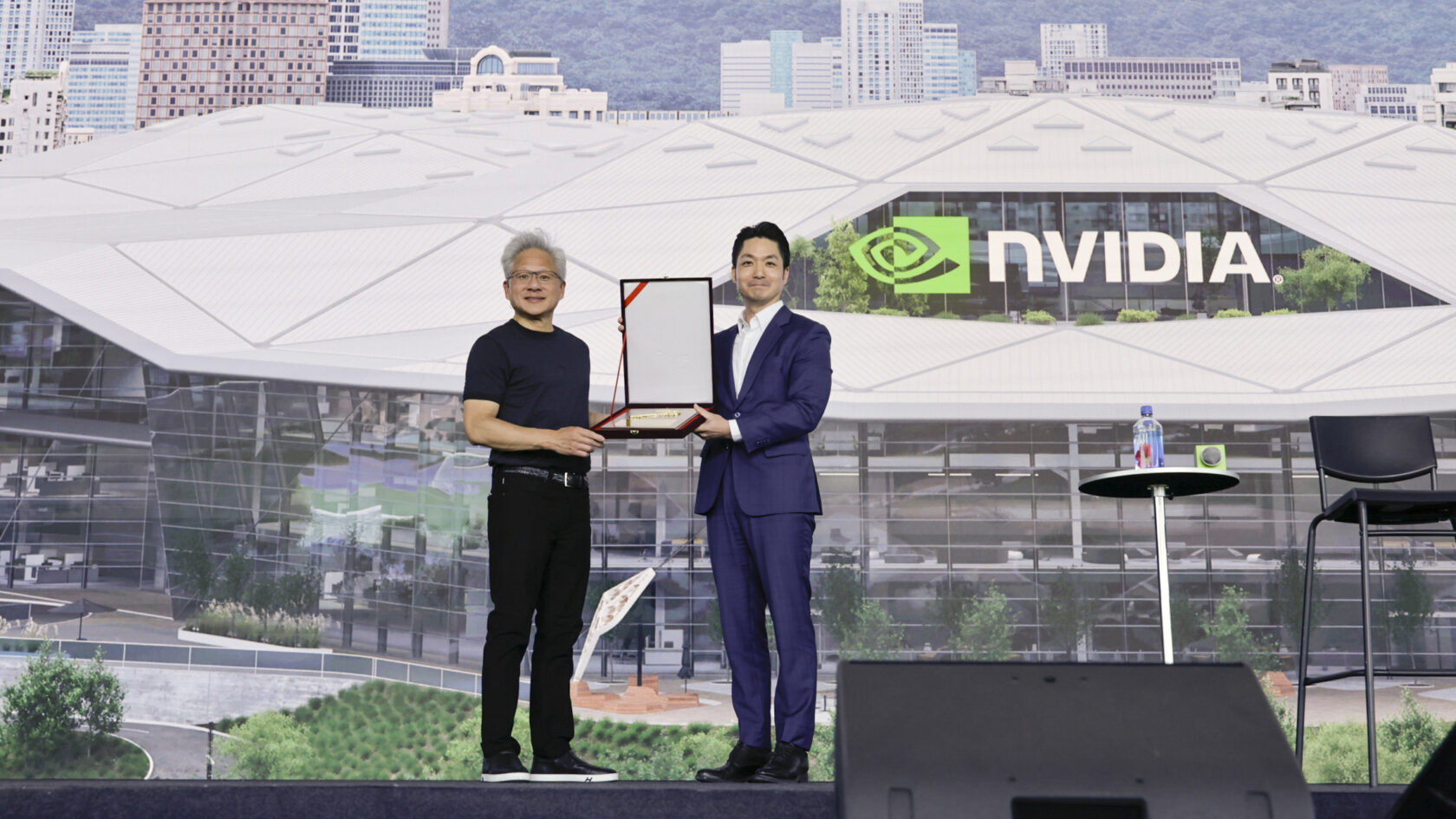
Modern astronomy recognizes 88 official constellations — today in Taipei, Huang unveiled NVIDIA Constellation to a packed crowd including employees, local leaders and his family.
Taipei Mayor Chiang Wan-an joined the celebration at the site of the new campus, shaking hands with Huang and presenting him with a key to the city. He also gifted Huang a traditional calligraphy scroll, which he made himself.
“The world is watching NVIDIA shape the future of AI,” the mayor told attendees.
Huang answered questions, joked with attendees in Mandarin and gave out signed champagne bottles to employees who have recently gotten married. The most popular topic: the NVIDIA Gear Store for company swag.
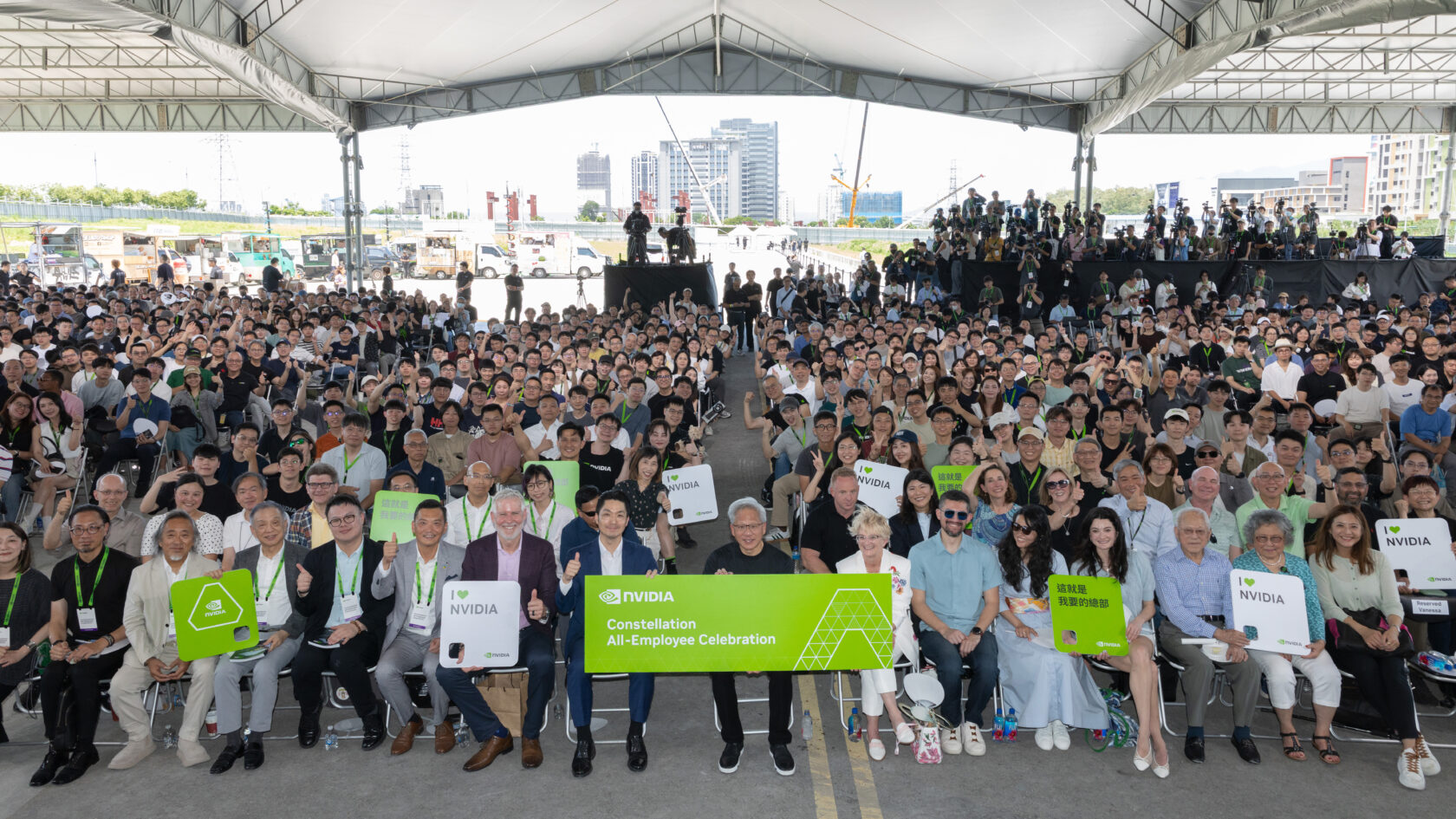
“Due to popular demand, this Gear Store will be open to the public,” Huang said to applause.
The new building, designed to house roughly 4,000 employees, will be based in the Beitou-Shilin Technology Park in northern Taipei on a site spanning nearly 4 hectares. It reflects the iconic design of NVIDIA’s headquarters in Santa Clara.

Once operational, the site will serve as one of the largest AI research and development hubs in the APAC region.
In his comments, Huang focused on the enormous opportunity of the current agentic AI moment to drive growth for NVIDIA and the entire Taiwan ecosystem. Looking ahead, the next phase is physical AI.
Physical AI “is going to transform manufacturing,” Huang told attendees. “In Taiwan, our partners will benefit from all our technologies that will transform manufacturing.”
Tuesday, May 26, 7 a.m. PT
NVIDIA and TSMC: The Strength of a Decades-Long Partnership

On Tuesday evening in Taipei, Dr. C.C. Wei, CEO of TSMC, joined Huang and the NVIDIA team for a meal filled with delicious food and laughter. NVIDIA and TSMC have long worked together to push the limits of what advanced semiconductor chips can make possible. Today, that decades-long partnership is building the infrastructure that powers the world’s AI factories.
Twice during the course of the dinner, the CEOs left their seats to hand out food and drinks and autograph items for the growing crowd outside the restaurant. NVIDIA GTC Taipei at COMPUTEX is only days away, and the fun has already started.
Monday, May 25, 8 a.m. PT
Dinner With the Huangs
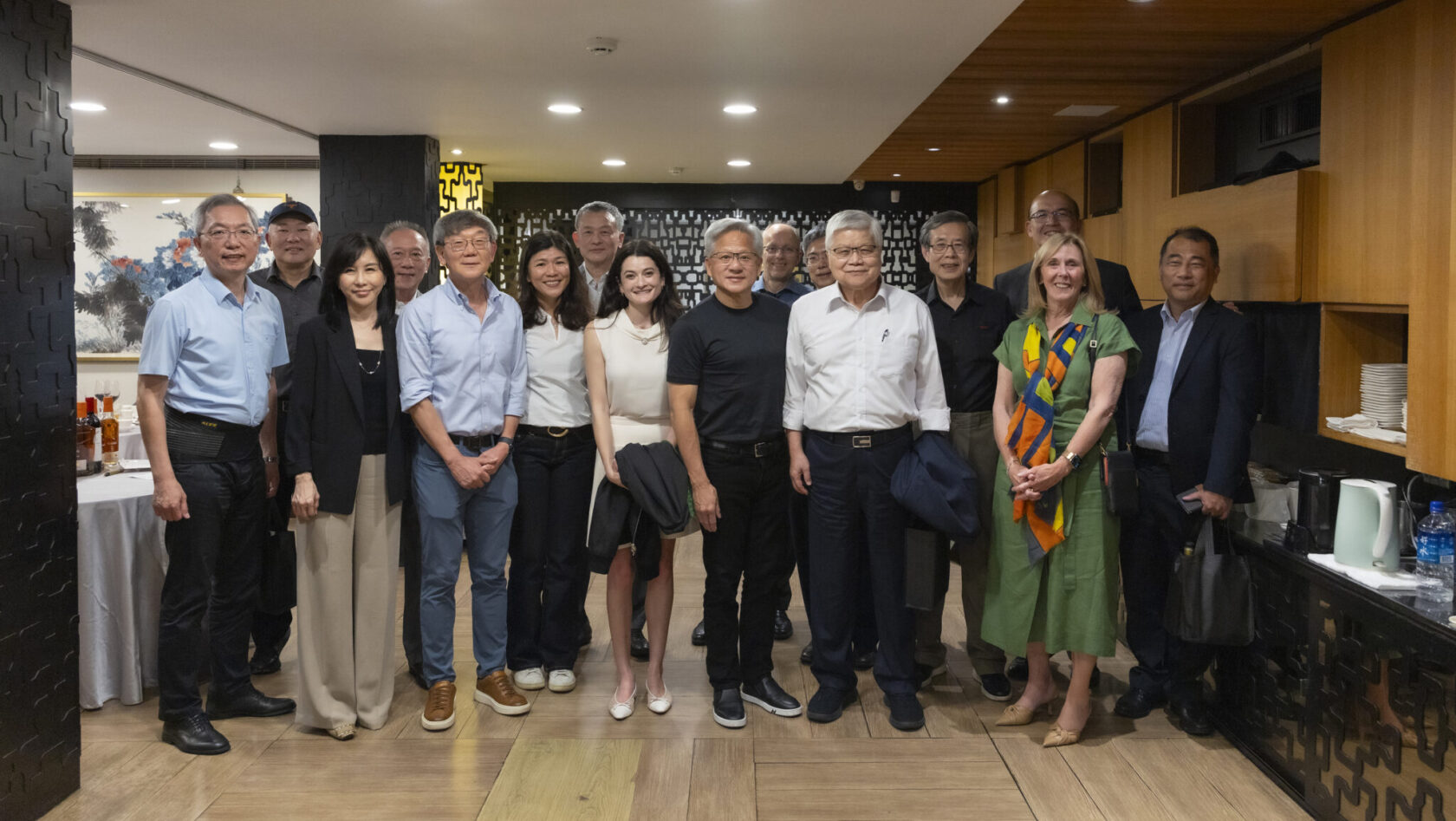
Huang joined his parents for a family meal and made sure to share fried mantou with local media gathered at the restaurant.


Sunday, May 24, 7 a.m. PT
It’s not a trip to Taipei without a stop at the Raohe St. night market. Matcha and mango shaved ice hit the spot on a warm evening.

Saturday, May 23, 5:35 a.m. PT
The Countdown to NVIDIA GTC Taipei Begins
NVIDIA founder and CEO Jensen Huang meets with industry leaders, dignitaries, developers and NVIDIA employees ahead of GTC Taipei.
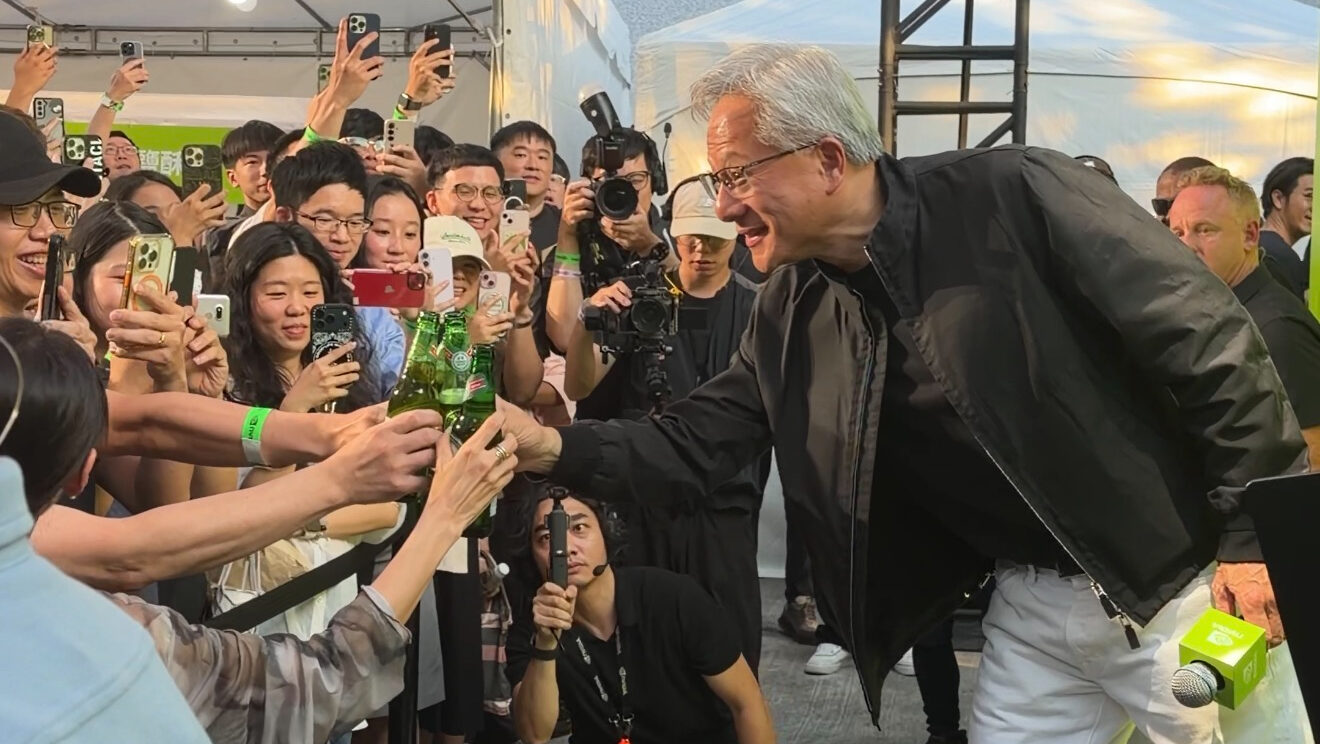
Hours after landing, Huang made a surprise visit to Meet-a-Claw, where NVIDIA and Taiwan’s developer community gathered for an afternoon of demos, tech talks and networking — an opportunity to get hands on with autonomous agents and OpenClaw.
Because OpenClaw is open source, it’s available for everyone to use and build their own AI agent. Huang described some of the ways OpenClaw agents secured by NVIDIA OpenShell can be of service for everything from software programming to marketing and content creation.
“It’s become a really, very powerful assistant,” Huang said. “The era of useful AI has arrived. That’s what this event is about, to show you what open source agents can do and then you can go create your own.”
Huang fielded a few questions from the assembled press, including the status of NVIDIA’s pending Taipei office. Huang smiled before offering his response.
“I think I’m going to give you an update on the headquarters this week,” he said. “It could be a secret … I might show you what the building is going to look like.”
Well, if it was a secret, it isn’t now. Come back for the latest on the NVIDIA Taipei office design and all the action in the run-up to NVIDIA GTC Taipei at COMPUTEX.

The air buzzed with excitement as NVIDIA founder and CEO Jensen Huang touched down in Taipei Saturday afternoon, greeted by a flurry of journalists and cameras. This set the tone for the weeks ahead — kickstarting the countdown to NVIDIA GTC Taipei at COMPUTEX.
Speaking with media on site, Huang said, “Vera Rubin is the largest product launch, probably in the history of Taiwan. Each one of the Vera Rubin systems consists of almost 2 million parts, and it includes 150 different ecosystem partners here in Taiwan to build it.”
Thursday, May 21, 9 a.m. PT 🔗
NVIDIA Wins COMPUTEX 2026 Best Choice Awards for Innovations Spanning AI Factories, Robotics and Autonomous Vehicles
NVIDIA Vera Rubin NVL72, NVIDIA Jetson Thor and NVIDIA Alpamayo were honored across five categories at Asia’s premier technology and computer trade exhibition.
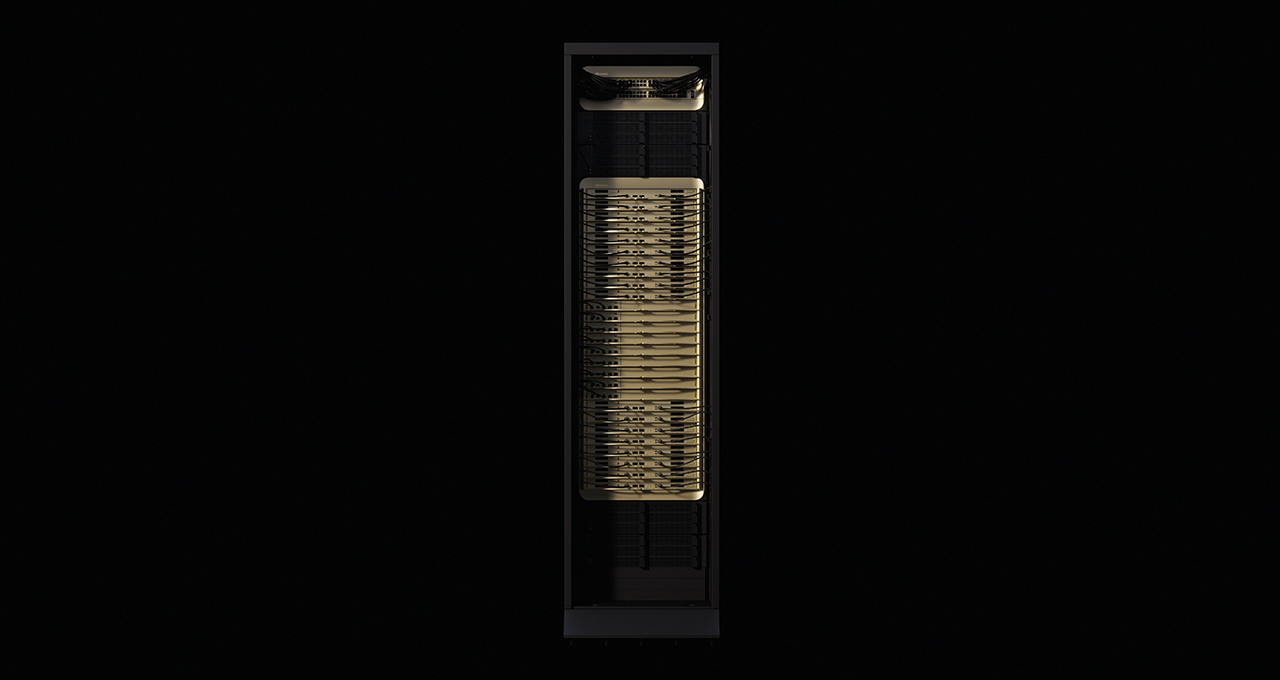
At this year’s COMPUTEX Best Choice Awards (BCA), NVIDIA today received honors recognizing its innovation in AI computing, integrated circuits and autonomous vehicle (AV) development.
The NVIDIA Vera Rubin NVL72 rack-scale AI supercomputer won Best Choice of the Year, a Golden Award and the Sustainable Tech Special Award; the NVIDIA Jetson Thor platform for edge AI and robotics won a Golden Award; and the NVIDIA Alpamayo open platform for AV development won the Vehicle Technology and Smart Cockpit Category Award.
Entries were evaluated on their functionality, innovation and market potential, showcased at the premier computer and technology trade exhibition.
Jensen Huang, founder and CEO of NVIDIA, will deliver a keynote at COMPUTEX on Monday, June 1, at 11 a.m. Taipei time.
NVIDIA Vera Rubin NVL72 Named Best Choice of the Year
For the first time in BCA history, a single product earned three honors at COMPUTEX this year. NVIDIA Vera Rubin NVL72 was named Best Choice of the Year, received a Golden Award and won the Sustainable Tech Special Award.
The exclusive Best Choice of the Year distinction is presented to just one product across the entire competition, recognizing it as the show’s most outstanding innovation.
The Vera Rubin NVL72 rack-scale system connects 36 NVIDIA Vera CPUs and 72 NVIDIA Rubin GPUs —- unified by the sixth-generation NVIDIA NVLink Switch for scale-up — with ConnectX-9 SuperNICs and Spectrum-X Ethernet Photonics co-packaged optics switches for scale-out and scale-across, as well as BlueField-4 DPUs to accelerate data processing across storage and security.
Vera Rubin NVL72 delivers up to 10x higher inference performance per watt and 10x lower cost per token. When paired with NVIDIA Groq 3 LPX, Vera Rubin NVL72 delivers up to 35x higher throughput per watt for trillion-parameter models.
Designed for agentic AI, reasoning and long-context workloads, it enables AI factories to scale intelligence inside the rack and across the data center with secure, continuously available deployment.
The Vera Rubin NVL72 sets the bar for scalability, resiliency and sustainable AI infrastructure. Its cable-free, hose-free, fanless modular tray design reduces assembly time from two hours to five minutes per compute tray.
The system’s power shelves deliver 6x more onboard energy storage for intelligent power smoothing, protecting both the rack and the broader power grid from steep load swings. In addition, its 100% liquid-cooled architecture operates at 45 degrees Celsius, meaning it drops seamlessly into existing liquid-cooled data centers and enables ambient-air, dry-cooler designs that redirect power from cooling overhead into token generation.
More BCA Wins for NVIDIA Technologies
NVIDIA Jetson Thor won a Golden Award as the most powerful edge AI compute platform built for physical AI and autonomous robots. Powered by the NVIDIA Blackwell GPU architecture, it delivers up to 2,070 FP4 teraflops of AI performance — 7.5x the compute and 3.5x the energy efficiency of the previous NVIDIA Jetson Orin generation — in a compact module configurable between 40 and 130 watts.
Already in production across hundreds of applications, Jetson Thor is built to bring generative AI to smart robots, industrial systems, medical devices and autonomous machines while maximizing run-time performance and memory optimization.
Plus, NVIDIA Alpamayo won the Vehicle Technology and Smart Cockpit Category Award for pioneering open, reasoning-based autonomous vehicle development. Alpamayo is designed to help developers tackle rare, complex long-tail driving scenarios — such as interpreting an ambiguous hand signal from a pedestrian, determining the right-of-way when traffic lights and road markings contradict each other, and safely passing an emergency vehicle parked partially in the lane ahead — which fall outside typical training experience
The Alpamayo open platform includes Alpamayo 1.5 and Alpamayo 1, 10-billion-parameter chain-of-thought reasoning vision language action models for AV research; AlpaSim, an open source, end-to-end simulation framework for high-fidelity AV development; and NVIDIA Physical AI Open Datasets, which include more than 1,700 hours of driving data across geographies and conditions.
Learn more about NVIDIA’s latest innovations at NVIDIA GTC Taipei, running June 1-4 at COMPUTEX.